
Supersets are simple in theory but often confusing in practice. Many people aren’t sure whether to rest between exercises, how long to rest after the pair, or how to choose the right movements.
A superset is simply two different exercises performed back to back with little to no rest between them.
Here’s the correct sequence:
Perform one full set of Exercise 1. Without resting, move immediately to one full set of Exercise 2. Only after both exercises are completed do you take your rest interval.
That’s one superset.
In this guide, I’ll break down the sequencing, rest periods, and different types so you can use supersets correctly and effectively, even if you’re a beginner.
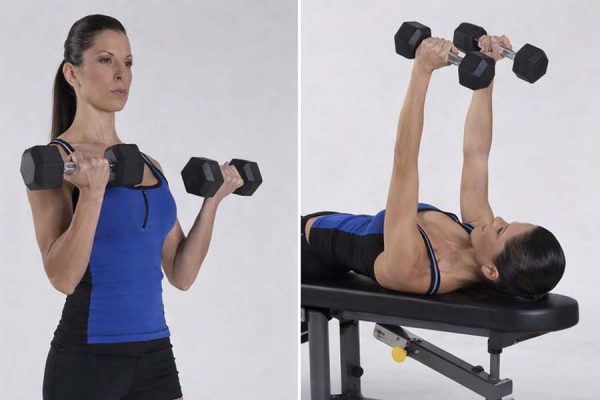
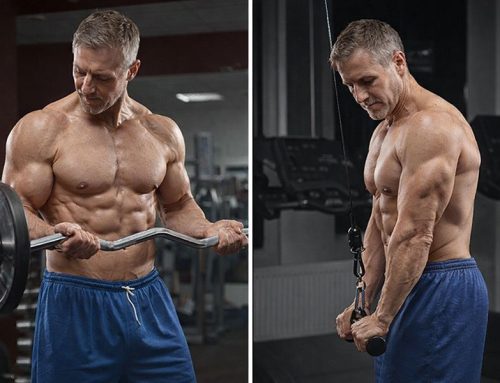
Bicep curls and tricep extensions are one of the most popular supersets
Why Supersets Are So Confusing
Confusion about supersets is completely understandable. If you’ve never had a coach walk you through the sequence in person, or seen the entire timing spelled out step by step, it can be unclear at first.
Part of the problem is that there are several legitimate types of supersets, along with modern variations that redefine the method slightly. Different trainers use different terminology and rest intervals, so advice can seem contradictory depending on the context and goal.
Superset training itself isn’t new. It’s been used for decades in bodybuilding, strength training, and general fitness. But as new programming styles evolve, so do interpretations of how supersets should be performed.
That’s why it’s important to understand the classic structure first before experimenting with variations.
Supersets are one of the most time-efficient training methods available. When structured properly, they can help you build muscle, improve conditioning, and shorten your workouts without sacrificing results. That’s why they’ve remained a staple in bodybuilding, strength training, and general fitness programs for decades.
What Are Supersets?
A superset is two different exercises performed back to back with little or no rest between them. You only rest after the second exercise is completed.
For example, you might perform a set of barbell rows for your upper back and immediately follow it with a set of bench presses for chest. That’s an antagonist (opposite muscle) superset. Or you might pair a bench press with dumbbell flyes for the same muscle group. Different pairings – same structure.
The key point, and the main source of confusion, is the rest period between exercises.
“Little to no rest” does not always mean zero seconds. In some cases, you can transition instantly — for example, doing dumbbell curls sitting on the edge of a bench and then immediately lying back for dumbbell tricep extensions without putting the weights down.
In other cases, minimal rest simply means enough time to adjust equipment, move to the next station, or change the weight – usually 10 to 15 seconds. That’s completely normal and still qualifies as a proper superset.
Keeping Up The Pace
The longer you wait between the two paired exercises, the less it resembles a true superset and the more it starts to look like straight sets with short rest intervals.
If you’re using the classic superset method, the transition between each pair of exercises should be efficient and deliberate. You don’t need to rush recklessly, but you do want to move directly from one exercise to the next without unnecessary downtime.
Because supersets depend on minimal transition time, logistics matter. In a crowded gym during peak hours, it can be difficult to secure two stations at once. Ideally, your second exercise should be set up and ready so you don’t have to cross the gym and lose the back-to-back sequence.
If you’re training at home, this is not an issue. In a commercial gym, it simply requires planning and awareness so you’re not monopolizing equipment or disrupting other members.
Whenever possible, choose exercise pairings that use the same equipment — such as two movements with the same set of dumbbells — so you can transition instantly and maintain the intended pacing.
I have developed dozens of these combinations for my superset training program, and I call them “TURBO” supersets (because they optimize time efficiency, and also because everyone else in the gym won’t hate you).
Different Types Of Supersets
Supersets all follow the same structure – two exercises performed back to back – but how you pair the exercises changes the training effect. Understanding the main types will help you choose the right approach for your goal.
Antagonist (opposing muscle) superset
Antagonist supersets pair exercises that work opposite muscle groups. While one muscle contracts, the opposing muscle rests. This allows you to maintain performance while keeping the workout efficient.
Common examples include:
- Bench press → Barbell row
- Dumbbell curls → Tricep extensions
- Leg extensions → Leg curls
Example structure:
Set 1: Dumbbell curls (8–12 reps)
Immediately followed by
Set 1: Dumbbell tricep extensions (8–12 reps)
Rest 60 seconds
Repeat for the prescribed number of supersets.
Because the opposing muscle rests while the other works, this is one of the most balanced and sustainable superset methods.
It works the same way for the lower body. Quadriceps and hamstrings are opposite muscles, so common supersets include leg extensions to leg curls and squats to Romanian deadlifts. When you train the big compound exercises, the only difference is, you may need to take about two minutes between supersets to recover.
Same Muscle Superset
Same muscle supersets pair two exercises for the same muscle group back to back. Instead of alternating opposing muscles, you continue working the same area with a second movement.
This approach increases metabolic stress and extends time under tension, which is why it’s popular in bodybuilding-focused programs.
Common examples include:
- Barbell squats → Leg press
- Bench press → Dumbbell flyes
- Lateral raises → Upright rows
Example structure:
Set 1: Barbell squats (8–12 reps)
Rest 10–15 seconds if needed to adjust equipment
Set 1: Leg press (8–12 reps)
Rest 60–120 seconds
Repeat for the prescribed number of supersets.
Because you’re training the same muscle twice in a row, fatigue builds quickly. You may need slightly longer recovery between supersets, especially when using heavy compound exercises.
Unrelated Muscle Supersets (Aka “Separated” or “Non-Interfering” Supersets
Non-competing supersets pair exercises that train unrelated muscle groups. This is often an upper body movement with a lower body movement, or two upper body muscles that are unrelated.
Instead of alternating opposing muscles or targeting the same muscle twice, you’re pairing movements that don’t directly interfere with each other.
Common examples include:
- Split squats → One-arm dumbbell rows
- Shoulder press → Bicep curls
- Lunges → Pull-ups
Example structure:
Set 1: Split squats (8–12 reps)
Immediately followed by
Set 1: One-arm dumbbell rows (8–12 reps)
Rest 60 seconds
Repeat for the prescribed number of supersets.
This style is often used in general strength, conditioning, and fat-loss programs. Pairing two compound movements – like a squat and a row – elevates heart rate and breathing significantly, creating a strong metabolic effect while keeping the workout time-efficient.
Unlike same-muscle supersets, the goal here isn’t to maximize muscle pump or local fatigue for hypertrophy. The emphasis is efficiency and overall conditioning.
Start Using Supersets The Right Way
Supersets aren’t complicated once you understand the structure.
Two exercises.
Back to back.
Then rest.
Whether you choose antagonist pairings, same-muscle supersets, or non-competing movements, the key is sequencing and pacing. When done properly, supersets can make your workouts more efficient, more challenging, and more productive.
If you’re new to supersets, start simple. Pick two exercises, follow the sequence exactly as outlined above, and focus on smooth transitions. Once you’re comfortable with the technique, you can begin experimenting with different pairings based on your goal.
And if you’d like a complete training program built entirely around properly structured supersets, that’s exactly how I designed TNB Turbo.
TNB Turbo is a fully programmed, step-by-step workout system that uses intelligently paired supersets to maximize efficiency and results. You don’t have to guess how to pair exercises or structure your rest intervals – it’s all laid out for you.
==>You can learn more about TNB Turbo here<==
Train hard and expect success,
Tom Venuto, creator of:
TNB TURBO: Ultra-Time Efficient Superset Training
Leave A Comment