
How to get six pack abs is still the single most common question I’ve been asked in my over 35 years in the fitness industry. Out of thousands of emails I receive every month, nothing comes close. And it’s not surprising. Abs are the one body part that frustrates people the most.
Some people think they need a better ab workout – and more often. Others assume they’re missing one secret “best” ab exercise. Many are already doing hundreds – sometimes thousands – of sit-ups, crunches, and leg raises every week and still can’t see their abs.
Here’s the truth most people don’t want to hear, but absolutely need to understand: If you can’t see your abs, it’s usually not because your abdominal muscles aren’t developed enough. It’s because they’re covered by body fat.
You already have a six-pack. Everyone does.
Training builds and strengthens the abdominal muscles. But seeing six pack abs – like seeing definition in any muscle group – is primarily the result of low body fat levels, not doing endless ab exercises.
This becomes even more obvious in the lower abdominal area, which is where most people – especially men – tend to store fat first and lose it last.
With that in mind, in this article I’ll explain why abdominal fat is so stubborn, how body fat storage and withdrawal works, how to use diet and cardio correctly for fat loss, and how to train your abs the right way if your goal is the six pack look (including my favorite advanced ab routine.
Table of Contents
1. Why ab exercises alone won’t give you a six pack
2. The Science behind stubborn ab fat (why it’s the last to go)
3. Why you can’t spot reduce abdominal fat
4. How low does your body fat have to be to see your abs?
5. The fat loss diet: 5 fundamental principles
6. How to use cardio for fat loss
7. The muscles that create the six-pack look
8. The best exercises for six-pack abs
9. An effective advanced ab workout
10. The bottom line on six-pack abs
1. Why Ab Exercises Alone Won’t Give You A Six-Pack
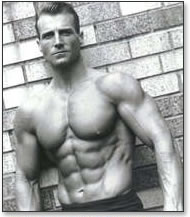
Let’s start with a common mistake I see all the time.
A young guy once wrote to me saying he was doing nearly 1,000 crunches and sit-ups a day, four days a week, and still couldn’t see his lower abs.
He told me:
“I’m starting to see my upper abs a little bit, but I still have a tire around my waist. What else can I do?”
His mistake is one I see all the time. He thought the problem was lack of abdominal development. It wasn’t.
You can train your abs every day. You can strengthen them. You can build endurance in them. But if body fat is covering them, you won’t see definition – no matter how many crunches you do.
The issue isn’t a lack of muscle development issue. It’s an excess of body fat issue.
And the lower abdominal region is where many people store fat first and lose it last.
2. The Science Behind Stubborn Ab Fat – Why It’s The Last To Go
Most people don’t have their fat distributed evenly throughout their bodies. Each of us inherits a genetically determined and hormonally-influenced pattern of fat storage just like we inherit our eye or hair color. In other words, the fat seems to “stick” to certain areas more than others
There’s a scientific reason for this. Your fat cells are not just inert “storage tanks” for excess fuel. They are actually endocrine glands which send and receive signals from the rest of the body. You could say that your fat cells “talk to your body” and your body “talks to your fat cells.” This happens through a hormone and receptor system.
For body fat loss to occur, you must first get the fat cell (adipocyte) to release the fat into the bloodstream. Then, the free fatty acids must be delivered to the working muscles where they are burned for energy.
For fat to be released, the hormone adrenaline (epinephrine) must be secreted and send a signal to your fat cells. Your fat cells receive this hormonal signal via adrenaline receptors called adrenoreceptors.
Fat cells have Beta 1 (B1) and Alpha 2 (A2) receptors. B1 receptors are the good guys. They activate hormone sensitive lipase, the enzyme that breaks down the fat and allows it to be released into the bloodstream to be burned. A2 receptors are the bad guys. They block the fat-releasing enzymes in the fat cell and encourage body fat formation.
3. Why You Can’t Spot Reduce Lower Ab Fat
So what does all that physiology mean in practical terms?
In men, the lower abdominal region tends to have a higher concentration of Alpha-2 receptors. That’s one reason why lower belly fat is often the last place to lean out.
In women, the hips and thighs commonly have a higher A2 receptor concentration for the same reason.
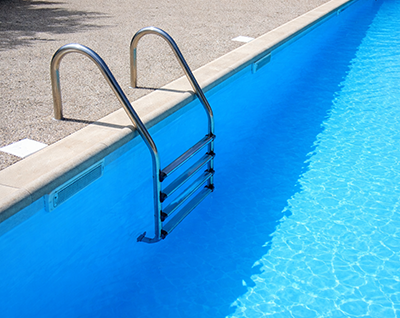
Think of abdominal fat like the deep end of the swimming pool. No matter how much you protest, there is no way you can drain the deep end before the shallow end. That’s just gravity for ya.
However, don’t let this discourage you. Lower ab fat will “drain.” it may simply be the last place to go.
First Place On – Last Place Off (Remember, F.O.L.O.!)
This also explains why doing hundreds or thousands of crunches has little impact on lower abdominal fat. Ab exercises can strengthen and grow the muscles. But they don’t directly remove fat on top of that area. You can’t spot reduce body fat to any significant degree.
What removes body fat – everywhere – is a calorie deficit. That deficit comes from: eating fewer calories, increasing exercise and overall activity, or combining both.
When I advised the young man who was doing 1,000 sit-ups a day, I told him to reduce the excessive ab work and redirect that effort into full-body weight training and higher-intensity cardio. More importantly, he needed to clean up his nutrition.
As it turned out, his diet was a mess. And as the saying goes: you can’t out-train a lousy diet.
It’s a major mistake to believe that endless ab reps will make your abs “pop” if excess body fat is still covering them. And the number one priority for body fat loss is the diet.
What Body Fat Percentage Do You Need To See Your Abs?
One of the most common questions about six pack abs isn’t about ab exercises or ab routines at all. It’s this:
4. How Low Does Your Body Fat Have To Be To See Your Abs?
The honest answer is: very low. However, it’s not the same number for everyone.
For most men, visible abs begin to show around 10–12% body fat, with sharper lower-ab definition often appearing closer to 8–9%.
For most women, visible abdominal definition typically begins around 18–19% body fat, with more pronounced definition closer to 16–17%.
To look truly ripped, it requires body fat levels that are even slightly under the low ranges I mentioned above. However, keep in mind that this may not be sustainable for most people, and extremes of low body fat may not even be healthy, especially for women.
Also, these numbers are general estimates, not guarantees.
Two people can look very different at the same body fat percentage because fat distribution is genetic. Some people store more fat in the lower abdomen. Others hold it in the hips, thighs, or lower back. That’s why one person may see upper abs at 15%, while another may need to get leaner before their lower abs are clearly visible.
Measurement method also matters. Skinfold calipers, bioelectrical impedance scales, and DEXA scans can all produce different readings on the same person. Body fat percentage is an estimate, not an exact number.
Also be aware that skinfold testing tends to show lower body fat numbers than other methods, which is why some people say men must be in the single digits and women need to be in the mid teens to see their abs.
That’s why chasing a specific “magic” percentage isn’t nearly as important as tracking steady progress and using the mirror as feedback.
The bottom line: there’s no single body fat number required. But one thing is for sure: if visible abs is your goal, make sure you just your expectations accordingly. You have to be much leaner than average to see a six pack.
5. The Fat Loss Diet: 5 Fundamental Principles
Many people say that “abdominals are made in the kitchen, not in the gym,” and there’s a lot of truth to that. You can do thousands of reps of ab work every week, but if your nutrition is not in order, you can forget about seeing 6-pack abs.
We can say the same thing about cardio. I’m a big fan of increasing cardio during a fat loss program, but it doesn’t do any good if you eat back the calories you burned. You must control your diet. The key to fat loss is the calorie deficit, which is why it’ on the top of the fat loss diet priority list.
1. Focus On The Calorie Deficit First.
Calorie deficit simply means you eat fewer calories than you burn. Eating 20% to 30% below maintenance is ideal. Beware of extreme calorie cuts because that can zap your energy and increase risk of muscle loss. It’s a smart idea to start with a moderate deficit – only about a 20% deficit. This way if fat loss slows down, then you still have room to drop to a more aggressive deficit, as much as 30% under maintenance.
When using larger deficits, I recommend eating more – up to maintenance calories – one or two days per week. This keeps up your energy, helps you retain lean body mass, and decreases metabolic slowdown. It also helps you stick to your diet better.
2. Prioritize Protein.
Eat a high quality lean protein with each meal (eggs, skinless chicken, lean beef, lean pork, fish, protein powder, greek yogurt etc). For fat loss as well as optimal muscle retention, spread out your your into multiple meals daily, preferably 4 to 5 protein feedings a day. The most important protein priority however, is to make sure you hit your total protein grams goal for the day.
For people who lift, 0.8 to 1.0 grams per pound of total bodyweight per day is still the best practice. Serious bodybuilders sometimes go slightly higher. It may be beneficial to lean toward a higher percentage of protein if you’re in an aggressive deficit or your body fat is already low and you’re trying to get ripped (“six pack abs lean”). Note: for people overweight with very high body fat, this daily target is usually set based on pounds of goal bodyweight.
3. Focus On Natural, High Fiber Carbs.
Low carb diets can certainly work, but carbs are not the enemy. I know bodybuilding champions who eat hundreds of grams a day even during contest prep and no one has better abs. The priority is a calorie deficit not a specific carb amount.
That said, keeping carbs moderate or sometimes slightly low leaves you room to keep the all-important protein high. Starting with 40% to 45% of your calories from natural carbs is a good guideline. You can reduce the carbs slightly more if you need to increase your calorie deficit. (Do NOT drop your protein calories on a fat loss diet).
Focus on filling up with fibrous carbs first. These are the non-starchy vegetables such as broccoli, cauliflower, green beans, zucchini, spinach, bell pepper, celery, onion, tomato, salad greens and so on. It’s nearly impossible overeat fibrous veggies. Secondarily, include low calorie, high fiber whole fruit. Third, with calories that are left, choose natural, unprocessed complex carbs such as rolled oats, sweet potatoes, potatoes, beans/legumes, brown rice and other 100% whole grains.
Arguably, the most effective fat loss diet in the world is one that is very high in protein, very high in veggies with only moderate starchy carbs and little to no sugar.
4. Limit Or Avoid Processed Carbs And Sugar.
When you’re on a fat loss diet, and especially when you have an ambitious goal like seen abdominal definition processed foods – especially processed carbs – should be kept to a bare minimum, if you eat them at all. Save them for treats or special occasions only, and even then keep the portion sizes small. Sugar and other processed carbs are calorie dense, highly palatable, and easily knock you out of your calorie deficit. They don’t help with fat loss, and they’re not healthy either.
5. Keep Dietary Fats Low.
Some fats are necessary for good health. The essential fatty acids in fatty fish are especially valuable. Fats like avocado, nuts, seeds and olive oil are also healthy. However, you don’t need a lot of them. And on a fat loss diet, these calorie dense foods can push you out of your calorie deficit easily. (Peanut butter is notorious for that). In bodybuilding and fitness-style diets the best practice is to get at least 15% of your calories from fat, but no more than 20%. 20% is a common target.
These are 5 of the basics for fat loss nutrition. Competition-level dieting (or dieting to get ripped) can be more sophisticated and little details start to matter a lot more, but if you haven’t covered the fundamentals first, worrying about minor diet details is a waste of time.
In fact, the simplest diet formula for fat loss is what I describe with the acronym CAP. This means calories and protein. Get those two priorities right along with choosing mostly unprocessed foods and you’re probably 80% of the way there.
6.How To Use Cardio For Fat Loss
Cardio has gone through extreme trend swings over the years – from “more is better” to “avoid it completely.” Both extremes miss the point.
Doing only cardio with little resistance training is a mistake. But eliminating cardio entirely is also a mistake.
The most effective fat loss strategy combines:
- Resistance training to preserve muscle
- Cardio to increase calorie expenditure
Some people with naturally fast metabolisms and high levels of non-exercise activity (NEAT) can get lean with only small reductions in food intake and a few sessions of formal cardio per week.
But most people struggling to see their abs simply aren’t burning enough calories.
For general health and fitness, 3 sessions per week of 20–30 minutes is sufficient. (Though it’s highly suggested by most health organizations to get 150 minutes of exercise per week, if you count walking).
For significant fat loss, 5–7 sessions per week of 30–50 minutes at a moderate pace is far more effective. This can be adjusted based on results – if you’re losing fat steadily, hold your cardio volume steady, if you’re not losing, increase the cardio.
You can choose any continuous activity you enjoy – cycling, stair climbing, elliptical training, classes, or brisk walking. They can all help with fat loss, but keep in mind that walking at a casual pace does not burn many calories per minute.
If time is limited, you could do 2–3 of your formal weekly cardio sessions as high-intensity interval training (HIIT). Even 20–25 minutes can produce excellent results if the intensity is high enough..
A lot of bodybuilders and strength athletes today shy away from cardio, except for walking, and suggest letting your diet combined with lifting do the work. You can lose fat without cardio.
But to reach the “ripped” body fat levels as I did for bodybuilding competitions, I would do moderately intense formal cardio 6 – 7 days a week for 40-50 minutes per session, in addition to my 5 weight training workouts per week.
I can tell you with 100% certainty that cardio accelerates your fat loss beyond what you can get with food reduction alone. But the truth is, it does take a lot of it to move the needle. If you’re willing to gradually scale up your cardio enough, the fat will come off faster and you’ll see your abs sooner.
The key point to remember: visible abs require low body fat. Low body fat requires a calorie deficit. Cardio helps increase your deficit by increasing the number of calories you burn, as long as you also control your diet at the same time.
(There were occasions during contest prep when I did cardio twice a day, and it continued to accelerate my fat loss. However, that’s not necessary for great results and certainly not time efficient considering how you can continue to adjust your diet. Getting extreme with cardio can also interfere with your recovery and leg training, especially lower body).
7. The Muscles That Create The Six-Pack Look
Now let’s talk about abdominal anatomy.
When people talk about “six pack abs,” they’re primarily referring to one muscle: the rectus abdominis.
The rectus abdominis is a long, flat sheet of muscle that runs vertically from your rib cage down to your pelvis. It’s segmented by tendinous intersections – the connective tissue bands that create the visible “blocks” of a six pack when body fat is low enough.
But just to be clear – don’t actually have six separate muscles. You have one continuous muscle divided into segments.
Upper vs. Lower Abs – Is There a Difference?
Technically, the rectus abdominis is one muscle. You cannot completely isolate the “upper” or “lower” abs as if they were separate structures.
However, research suggests there may be differences in neural activation between the upper and lower portions of the muscle depending on the movement pattern. Exercises that involve lifting the rib cage toward the pelvis (like crunches) tend to emphasize the upper region more, while movements that bring the pelvis toward the rib cage (like reverse crunches or hanging leg raises) tend to increase activation in the lower region.
That doesn’t mean you can isolate your lower abs completely. But it does mean that exercise selection and movement mechanics can influence which portion of the rectus abdominis is stressed more. And that matters if your goal is maximum development.
The Obliques: “Framing” the Six Pack
The external and internal obliques run diagonally along the sides of your abdomen.
These muscles don’t create the six-pack blocks themselves, but they “frame” them. Well-developed obliques enhance the taper from your rib cage to your waist and make the rectus abdominis stand out more dramatically.
Neglecting them can make your midsection look less impressive even when body fat is low.
What About the “Core”?
The transverse abdominis is a deep abdominal muscle often associated with core stability. It plays an important role in spinal support, posture, and injury prevention. Exercises like planks, carries, and anti-rotation movements are excellent for strengthening this deeper layer.
Core stability training is important. But if your most desired goal is visible, well-developed six pack abs, the primary muscle you must train progressively is the rectus abdominis – supported by strong obliques.
That’s what we’ll focus on next.
8. The Best Exercises for Six Pack Abs
If your goal is visible, well-developed abs, you must directly train the rectus abdominis through spinal flexion and progressive overload.
Here are some of the most effective exercises:
Lower-Body-to-Upper-Body Movements
(Emphasize pelvic curl and strong lower rectus activation)
- Lying leg raises
- Lying leg raises with hip lift
- Reverse crunches
- Incline reverse crunches
- Reverse crunch with a small med ball between the knees
- Captain’s chair (support) knee raises
- Hanging knee raises
- Hanging twisting knee raises
- Hanging straight leg raises
These movements involve curling the pelvis toward the rib cage. While you can’t completely isolate the “lower abs,” this pattern tends to increase activation in the lower portion of the rectus abdominis.
Hanging straight leg raises are extremely challenging. Most beginners should start with support knee raises or hanging knee raises before progressing to straight leg versions.
Upper-Body-to-Lower-Body Movements
(Classic spinal flexion for rectus development)
- Floor or Bench crunches
- Decline bench crunches (bodyweight or weighted)
- Stability ball crunches (bodyweight or holding a dumbbell on the chest)
- Twisting crunches
- Side (oblique) crunches
- Bicycle crunches
Stability ball crunches are particularly effective because the unstable surface increases total abdominal activation, including assistance from the obliques.
Weighted Flexion Movements
(Best for Progressive Overload)
- Kneeling cable crunches
- Machine crunches (plate-loaded or selectorized)
These allow resistance to be increased gradually – and significantly – over time which is one of the most powerful ways to make your abs “pop,” just like any other muscle group.
Progression Matters
Just like training chest or legs, your abs respond to progressive overload. Weighted exercises can be progressed by gradually increasing resistance.
Bodyweight movements for the abs can also be progressed even without weight by choosing a more difficult variation of the same exercise. Here’s an example of a progression sequence from easiest (beginner) to hardest (advanced):
- Lying leg raise
- Leg raise with hip lift
- Support (Captain’s chair) knee raise
- Hanging knee raise
- Hanging straight leg raise
Each step increases the challenge significantly. Master one level before progressing to the next to avoid excessive swinging or momentum (poor form).
9. An Effective, Advanced Ab Workout
Some people, once they learn how body fat storage and fat loss really works, wonder if they need to train their abs at all. The answer is absolutely yes!
Ab training is important. A strong core improves athletic performance and reduces risk of injury. And on the aesthetics side, once you are lean, your abs will look much better and more chiseled after you’ve trained them diligently.
With that said, it doesn’t take a lot of ab training – certainly not thousands of weekly reps.
Just to give you some perspective, Even when I was actively competing in bodybuilding competitions, I only did about 15 – 20 minutes of ab work two times per week, with anywhere from two to four exercises for about 10-25 reps per exercise. That schedule has rarely changed – it’s all I need to maintain my abs.
Forget about thousands of reps of ab exercise – it’s a waste of time. It may not be good for your spine if it’s only crunches and sit ups too. The reason my abs looked the way they did onstage and I can still maintain some visible abs all year round, is not from endless repetitions, but because I get my body fat down low enough by using an effective high-protein, calorie deficit focused loss diet combined with cardio.
Here’s a classic ab routine that I’ve used for years and still do (for bodybuilding/ ab-development purposes). I do this routine only twice a week and I change some of the exercises approximately every 4 to 8 weeks so my body doesn’t adapt.
I prefer slightly higher rep range than other muscle groups, but as you can see, even though this is one of the more high volume and advanced ab workouts I’ve used, it’s still a far cry from doing a thousand reps a day – and how often did I train my abs? Only 2 days a week!
A1 Hanging leg raises
3 sets, 15-20 reps
Superset to:
A2 Hanging knee ups (bent-knee leg raises)
3 sets, 15-20 reps
(no rest between supersetted exercises A1 & A2, 60 sec between supersets)
B1 Weighted swiss ball crunches (or kneeling cable crunches)
3 sets, 15-20 reps
Superset to:
B2 Incline Bench Reverse crunches
3 sets, 15-20 reps
(no rest between supersetted exercises B1 & B2, 60 sec between supersets).
Stay tuned to this blog because I’ll be posting more ab workouts in the near future.
10. The Bottom Line On Six Pack Abs
1000+ reps of daily ab work is an amazing feat of endurance, but that’s not how you get visible, 6-pack abs. If you were to do 1,000 reps of ab exercises every day, you would have outstanding ab development and you would definitely have great muscular endurance. Unfortunately, if your abs were covered up with a layer of fat, you still wouldn’t see them.
I once saw a photo of a man who broke one of the Guinness World Record for sit ups. It was the most paradoxical thing, but this man did not have any abdominal muscle definition. He was not obese or overweight at all, mind you, but he had a small enough layer of body fat that the muscular definition did not show through. I’ve never seen a better real life example which demonstrates the basic principle discussed in this article:
You get great abs from reducing your body fat, and you reduce your body fat by creating a caloric deficit through fat burning nutrition and calorie-burning cardio.
I’ve spent my entire career – through more than 35 years and 28 bodybuilding competitions – studying the science of how to lower your body fat.
If you’d like to learn for yourself, everything I’ve learned about fat burning nutrition and getting your body fat level low enough so that you can see a “6 pack rack” of abs, then be sure to take a look at the Burn The Fat, Feed The Muscle program. Hundreds of thousands of men and women call this their “fat loss bible” and the newest edition is still a best seller after almost 25 years of publication.
The new Flexible Diet For Fat Loss program is also now available. This is for people who want to know how to lose fat without restriction and deprivation – it shows how you can actually sustain your diet better when you include your favorite foods in the right moderation in the right type of meal plan : www.BurnTheFat.com
Train hard and expect success,
Tom Venuto,
Author of Burn the Fat, Feed the Muscle
Author of Flexible Meal Planning For Fat Loss
Six Pack Abs FAQ – Detailed Guides:
How Often Should You Train Your Abs?
Should You Train Abs With Heavy Weights?
Are Crunches Bad For Your Back?
Can Ab Exercises Help Burn Off Belly Fat?
How Did Tom Venuto Get Ripped Abs?
 About Tom Venuto
Tom Venuto is a natural bodybuilding and fat loss coach with 35 years of experience. He holds a degree in exercise science and has trained hundreds of clients in person and thousands online. He is also a recipe creator specializing in fat-burning, muscle-building cooking.
A former competitive bodybuilder, Tom is now a full-time evidence-based fitness writer, blogger, and author. His classic book Burn the Fat, Feed the Muscle is an international bestseller, first as an ebook and later as a hardcover and audiobook. His newest e-book. Extreme Fat Loss, which analyzes controversial diet and training programs, became an instant bestseller.
Tom’s work has been featured in Men’s Fitness, Oprah Magazine and dozens of other major publications. He is best known for his no-BS, scientific approach to natural fat loss and muscle-building.
Tom is also the founder of Burn the Fat Inner Circle, a fitness support community with more than 59,000 members worldwide since 2006.
Another fantastic blog!!! I have dropped 4 more pounds since this summers BTF TC challenge by following these exact principals your write about.
I have set up my first figure NPC competition in SLC March 2015.
Once again I want to say THANK YOU. I have a whole lot of gratitude for the information your provided that helped me break some barriers in my life.
Kindest regards,
Cori
<3 It all makes perfect sense to me now <3 XOXOXOXO :)
Tom, I’m curious about how your body feels (especially your legs) while performing “7 days a week” cardio. It makes sense to me if you cut out weight training for legs during this time (like squats). But if you’re also training your legs…then how do you ever “recover” from this non-stop cardio?
hi Paul. When my goal was intently focused on getting ripped for bodybuilding, I have always used cardio without any fear of it interfering with my recovery or leg training. I always feel better, not worse when i do cardio, and responded well with as much as 6-7 days a week of cardio on top of 5 lifting workouts per week and the added cardio got me lean much much faster compared to diet alone.
That said, I never considered it mandatory to do daily cardio for me or anyone else. when muscle and strength retention becomes an issue, you can make a good argument for using the minimal effective dose of cardio – maybe just 3 days a week for example, at first, then add more days or duration later only if you need it, or if you want to speed things up. Its not a bad idea to have extra cardio saved as an “ace in the hole”
certainly you can get lean with diet alone, but with cardio it very simply gets me leaner faster and helped me dial it in during the final peaking stage to get all the way ripped.
My body recovered fine from it and i felt it never interfered with my leg training. I typically train legs once every 5-6 days and hit them really hard. I separated the cardio and weights usually am and pm. If i did cardio in same session – always after weights. No running as i felt that did tap into recovery and leg size, but bicycle for example i felt only helped my legs look better. Ive used a lot of stairmaster and stepmill too, a bit of incline treadmill walking. no impact cardio. There is definitely an interference effect and concern about recovery from running frequency and or long distance.
my cardio for fat loss is usually moderate so its just not that taxing on the body and nervous system. If I do intense cardio, i keep that less frequent to help avoid overtraining (no HIIT every day etc).
There is a point where cardio volume (and or intensity) gets so high that it interferes with strength and muscle size, for sure, but I personally think i rarely if ever experienced that and if i did it was partly due to overly restrictive dieting too.
When im going after muscle gains, it’s a different goal, so while i keep doing cardio for health and conditioning, I keep formal cardio to about 3 days a week 20-30 min or so, moderate to high intensity. I also walk daily. That wont interfere with strength and muscle. less cardio during muscle gain programs, more cardio during cutting programs – simple.
Everyone is different, but I think a lot of people have irrational fear of cardio. The body can handle a lot of work – more than we give it credit for and its easy to adjust the volume up or down based on how you respond.
Thanks for the response Tom! Really appreciate you sharing your context and the intricacies. My mind is sadly closed to cardio that’s not high intensity and minimum 50 minutes. It’s worked for me to the sum of 50 lb’s lost recently. But as you’ve noted before, the leaner you get…the more you have to up the intensity. So in my context, 7 days without a day off after “leg day” sounded like pure torture lol!