
Are fat burners safe? That’s one of the most common questions people type into Google – and for good reason.
Some years ago, the United States Food And Drug Administration (FDA) warned dieters and bodybuilders to “immediately” stop taking Hydroxycut – the over the counter herbal fat burner pill. They cited 23 reports linking the diet supplement to liver damage, and with the death of a teenager.
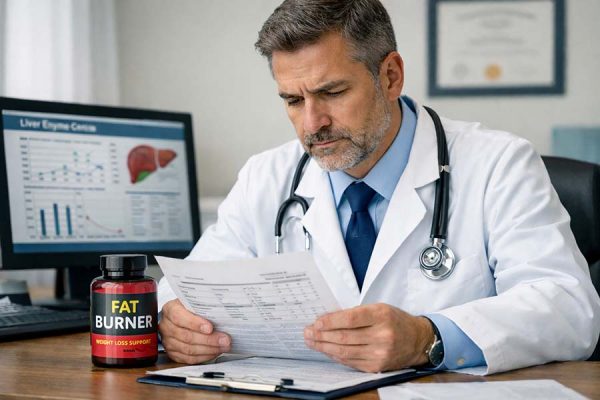
I don’t know if a lot of people still use it or even how the ingredients in this fat burner product have changed, but back in the old days, it was advertised everywhere inluding multi-full page ads in the muscle magazines, The reported sales were 1 million bottles per year.
Stories of the diet pill recall hit all the major newswires, including Reuters, CBS News, The New York Times, CNN and The Associated Press. The FDA put out a news release about it.
When the story first broke, it was also one of the top trending topics on Twitter.
Generally, a single case study or adverse effect report is not a cause for alarm. Often, case studies of adverse effects from use of herbs or supplements are merely rare anomalies in susceptible individuals where use of the ingredients were contraindicated, other products/ingredients/drugs were stacked, and or the products were taken at abuse dosages.
When millions of people take a product, someone is bound to have a reaction of some kind.
In fact, you even occasionally see a negative adverse effect report for supplements such as creatine, which now has a a three-decade research-proven safety record.
Experimental research is needed to determine both efficacy and safety. However, “herbal” or “natural” does not necessarily mean safe and the supplement industry is highly unregulated.
Adverse effects from the use of so-called “safe” and “natural” herbal supplements have appeared in the research data bases for years the recent Hydroxycut recall is only one example.
So far, health officials don’t know which ingredient in Hydroxycut was causing the problems because it contains numerous ingredients and the formula has changed more than once. Researcher Ano Lobb says the problem may be hydroxycitric acid.
Hepatoxicity associated with weight-loss supplements: a case for better post-marketing surveillance
http://www.ncbi.nlm.nih.gov/pubmed/19360927
Severe hepatoxicity due to Hydroxycut: a case report
http://www.ncbi.nlm.nih.gov/pubmed/18661239 (Feb 2009)
Hydroxycut hepatotoxicity: a case series and review of liver toxicity from herbal weight loss supplements
http://www.ncbi.nlm.nih.gov/pubmed/19058338
Acute liver injury associated with the herbal supplement hydroxycut in a soldier deployed to Iraq
http://www.ncbi.nlm.nih.gov/pubmed/17897352
Two patients with acute liver injury associated with the use of the herbal weight loss supplement Hydroxycut
http://www.ncbi.nlm.nih.gov/pubmed/15767636
Over the counter herbal supplements are not necessarily free of side effects or risks.
Like drugs, supplements should be viewed in terms of their risks versus benefits. After weighing the evidence, even if the risk is low, are the benefits high enough to justify the use of these products?
What I’m asking is, do they even work? And if so, do they work well enough to justify the expense or do the benefits amount to minutia?
When you look at how ineffective over the counter herbal fat burners really are (based on research data), I always ask myself, why bother? Why waste the money? And with the way most of the advertising overstates the claims or distorts the research, why give your money to those companies?
I’m a lifetime natural bodybuilder. I’ve never used banned or illegal drugs to enhance my physique.
In the mid-to-late 1990s, when ephedra was still legal and sold over the counter, I did experiment with ephedra/caffeine products like many competitors did at the time.
Here’s what I learned:
They were marginally helpful at best. They were far more powerful as stimulants than as true fat burners.
Since then, I’ve reached contest-level conditioning and low single-digit body fat without using any fat burners at all.
They simply don’t make much difference.
Those great bodies you see in the advertisements don’t come from a fat burner supplement.
One of the most revealing moments in supplement marketing history came from the documentary Bigger, Stronger, Faster.
Christian Boeving was featured in Hydroxycut ads claiming the supplement helped him get ripped. Later, in the documentary, he admitted using anabolic steroids, and made it clear that just because he used Hydroxycut didn’t mean that was the reason his physique looked the way it did.
When the film aired, Hydroxycut dropped him.
People forget these stories.
But they reveal how supplement marketing really works.
Related Articles:
Ephedra and other Fat Burners Exposed


Tom, I’m so glad I found BFFM before I succumbed to the temptation to try Hydroxycut. The ads in the magazines made it look like it was soooo effective. I was always nervous about putting crap in my system, and thanks to BFFM for confirming what I was always suspicious of.
Hey Tom, With 23 reports out of millions of bottles taken, should they do a massive recall?I do not believe in taking fat burners when you can be very successful with proper nutrition and training, there is simple no need to take them. But probably those people already had existing health problems and should not have taken fat burners in the first place, or they probably exceeded the recommended dosage or had taken bottle after bottle nonstop.What if someday the FDA starts banning other supplements like glutamine, protein, multivitamins, etc., just because a few people do not take them properly? I do not take fat burners but I do use other supplements like these, because I am very serious about my training.The fat loss industry is just money, lies and marketing, but I hope that other good supplements do not start getting banned just because a few people might abuse them and know they are putting their health at risk by doing so.
Maria, you bring up some very good points. When millions of people take a supplement, there are bound to be reactions, and some people are just plain dumb in the way they abuse products such as ephedrine. Lots of people were ODing on it or taking it despite health contraindications so its no surprise some folks ended up dead or in the hospital.My philosophy on these types of things always leans towards more personal freedoms and less regulation.However, in the case of weight loss supplements, the industry is so unregulated, both the products themselves (FDA) and the advertising claims (FTC) that most consumers havent got a prayer of protecting themselves either from health hazards or from scams.In order to decipher those advertisements, you have to bypass your emotions, be able to think critically and know how to verify the claims with primary research. Most people do not think logically and they have no idea how to read or intrerpret research.So, while I shudder to think of more regulation and more natural health products being pulled off the shelves by the government, when it comes specifically to weight loss, if they cant get a grip on the marketing lies and scams, it wouldnt bother me one bit if they yanked EVERYTHING.tom
I think hydroxycut was actually banned in the UK at one point. not sure if it still is.
I think it is interesting that this “reformulated” Hydroxycut is doing damage to one’s health and it was deemed a safe replacement to the original one containing ephedra.The original Hydroxycut with ephedra was probably the SAFER formulation and it was blackballed due to people with pre-existing conditions taking it who should have never taken that risk. Plus, it actually worked well when taken properly and in conjunction with diet and exercise.I was always skeptical of the reformulation and how wonderful this new stuff was. I think nothing works as well as hard work! BUT when you needed a little boost or needed to kickstart, ephedra worked wonders.
I’ve had a very powerful side effect from a fat burner, it was Rapidcuts from Allmax.I was doing construction at the time and started getting serious cases of vertigo, making me almost puke. Whenever I looked straight up, it would make my vision spin like as if I was on a fast amusement park ride. Even trying to lay down on the bed would give me it and I’d have almost puke laying down. After stopping use, it took a few days to go away. Few months later I tried using them again with the same effect, so I definitely see how these new problems are appearing with herbal supplements- and for it to cause death is quite scary since from what I’ve seen a lot of people see them as a safe-haven from using ephedrine.
Hydroxycut and these over the counter supplements are not worth any health risks! I feel it is better to get your body to where you want it to be the natural way!
hey Tom nice post thanksHydroxycut and other fat burners in general are overrated products, they promise but never deliver.millions of people have achieved great result without such supplements. so, why would anyone waste his money buying such things?
While I’m sure these supplements help, I just see them as drugs/unnatural substances that your body is not meant to take in.
Do lions,tigers,wolves, etc. take supplements to get strong or lean? Um no.
Very nice read I take a lot of supplements and never really considered the liver damage they maybe causing.