
How often should you train your abs? Ask that question online or in a gym, and you’ll hear wildly different answers – mainly because many people believe the abdominal muscles are somehow different from other muscles in the body.
Some say abs should be trained just like any other muscle group, a few times per week with progressive overload. Others insist the abs recover faster and can handle far more frequent training – every other day, or even almost every day. You’ll still hear recommendations like “train abs daily” floating around the fitness industry.
So who’s right?

Here’s the short, honest answer: your abs are not a special muscle group that requires a completely different training strategy. They’re skeletal muscle, they respond to resistance training the same basic way other muscles do, and they follow the same recovery principles.
That said, there are a few practical differences that affect how often you should train them, including training volume, intensity, and how much ab work you’re already doing in your regular workouts.
The good news is that exercise science has advanced far enough that we now have clear, evidence-based guidelines most people can follow with confidence, without guesswork, gimmicks, or daily ab marathons.
Is Abdominal Muscle Tissue Really Different?
No – it’s a myth that the abdominal muscles are fundamentally different from other muscles in your body, or that they require ultra-high reps or daily training to grow and get stronger.
You’ll often hear claims that the abs are “mostly slow-twitch” muscle fibers, and therefore need higher reps or more frequent training. In reality, research shows that the abdominal muscles contain a mix of slow-twitch and fast-twitch fibers, similar to most other skeletal muscles. The exact distribution can vary slightly between individuals and between different regions of the abdominal wall, but there’s nothing unique or extreme about it.
More importantly, fiber-type differences don’t override basic training principles.
In terms of muscle cell structure, physiology, and how they respond to resistance training, the abdominals behave like other skeletal muscles. They respond to progressive overload, appropriate training volume, and adequate recovery.
That means you can train your abs using the same variables you use for other muscle groups – load, sets, reps, and frequency. Some people prefer slightly higher reps for ab exercises, and that can work well. But the abs also respond to moderate reps and heavier resistance.
In short, differences in ab training programs should be driven more by individual goals, total training volume, and recovery, not by the idea that abdominal muscles are biologically unique.
Abdominal Training And Muscle Recovery
The abdominal muscles also have similar recovery needs to other muscles. After intense resistance training, muscle tissue is stressed and broken down at a microscopic level, and it takes time for that tissue to repair and rebuild.
Because of this, the abs generally benefit from the same recovery principles as other muscle groups. For most people, that means training them about 2 times per week, give or take, depending on total training volume and intensity.
When someone wants to prioritize a lagging body part or maximize development, increasing training frequency is one possible strategy. However, even during priority phases, muscles still require adequate recovery time – typically at least 48 hours between hard training sessions.
That’s why, even in higher-frequency programs, resistance training for a given muscle group is usually capped at 3 times per week or every other day at most. This guideline applies to the abdominals as well. Training them more often than that doesn’t speed up your results and can actually interfere with recovery and progress.
More Reasons Training Abs Every Day Is Not Necessary (Even When It’s Possible)
When it comes to non-resistance or low-intensity exercise, it is often possible to train every day and recover just fine. This includes many bodyweight movements, calisthenics, and lower-intensity cardio. Most bodyweight-only ab exercises don’t break down muscle tissue to the same degree as heavier, higher-intensity resistance training.
That’s why you’ll occasionally see people – many of whom look lean, fit, and athletic doing sit-ups, push-ups, and similar exercises almost every day.
But just because something is possible doesn’t mean it’s necessary or even optimal.
Most experts agree – and I agree too – that training your abs every day is unnecessary, at least in the sense that there’s a diminishing return on the extra time and effort beyond about 2 focused ab workouts per week.
If you’re prioritizing ab development, you might bump that to 3 days per week, but any additional benefit from training them more often is usually so small that, from a practical standpoint, you could argue it’s time better spent elsewhere.
At that point, you also have to ask yourself whether your abs are truly recovering, or whether you’re slowly digging a hole with fatigue, stalled progress, or even overuse injuries.
You may read about a fitness model training abs every day, or see a Navy SEAL on YouTube doing hundreds of sit-ups, push-ups, and pull-ups daily. That doesn’t mean you need to do the same. Recovery ability varies widely based on your genetics, training experience, conditioning level, and technical skill – and what works for one person isn’t automatically the right approach for another.
The Effect Of “Indirect” Ab Training
Here’s something else I want you to consider: if you’re doing full-body weight training, you may already be training your abs more than you realize.
Your abdominal muscles and core don’t just work during crunches and planks. They contract hard any time you’re stabilizing your torso under load – even when the exercise isn’t labeled as “ab work.”
Front squats, deadlifts, overhead presses, pull-ups, and rows all create strong isometric, or bracing, contractions of your abs and core. In fact, you might have experienced this yourself. It’s not uncommon to hear people say they had delayed onset muscle soreness in their abs the day after heavy pushdowns (a triceps exercise) or straight-arm pulldowns (a lat exercise).
I’ve even seen cases where someone had excellent abdominal development – visible abs and clear separation – without ever doing direct ab exercises like crunches or planks. Their abs were getting plenty of stimulus indirectly from heavy compound lifts, and they also had sufficiently low body fat to reveal the muscle.
This is another reason daily ab training usually isn’t necessary. Depending on how you train, your abs may already be getting significant work – whether you realize it or not.
If Your Abs Get Worked During Heavy Compound Exercises, What About Skipping Ab Training Completely?
Some people ask me, “If your abs and core are already worked during heavy compound exercises like overhead presses, front squats, and deadlifts, isn’t it possible to get great-looking abs without any direct ab training at all – just by training hard and heavy on those lifts?”
I look at this the same way I look at the argument that if you do compound barbell movements, you don’t need to train your arms directly. After all, your triceps are worked during pressing movements for chest and shoulders, and your biceps are worked during pulling exercises like rows and chin-ups.
There’s some truth to that – but in my experience, a muscle that isn’t trained directly will never be developed to its full potential, unless you have freaky genetic gifts for growth in that body part.
Without direct ab training, just like with arms, you’re almost certainly leaving some development on the table – especially if you’re not genetically gifted.
Now, if you’re genuinely 100% happy with the way a body part looks, you could make an argument for minimalist training or even skipping it altogether for cosmetic reasons. I know genetically blessed people with massive calves who never train them.
But abs aren’t just about appearance. Most people also care about strength, athletic ability, and general function. Strong, well-balanced muscles, including the abs, can also help reduce injury risk.
That’s why I believe it pays to include at least a minimal amount of direct ab training, even if you’re not a big fan of ab workouts.
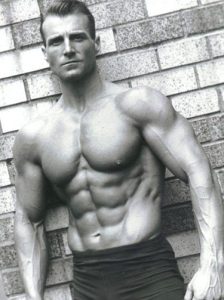
For what it’s worth, I’ve never loved ab training myself, and I’ll be the first to admit I slacked off on it at various points in my life. That actually gave me a useful perspective. I’m fortunate to have decent ab genetics, so when I was lean enough, my abs still looked pretty good even when I didn’t train them directly.
But when I did train them, they looked even better – by a wide margin.
Over time, I found that even one focused ab workout per week was enough to maintain both ab strength and a solid six-pack. Still, I don’t recommend skipping direct ab training entirely. A little goes a long way.
And Always Remember: The Best Way To SEE Your Abs Is… Reduce Your Body Fat!
When you see an awesome, well-defined set of abs on someone, it means they’ve achieved low body fat. It doesn’t necessarily mean their ab training routine is perfect – or even especially sophisticated.
This is an important distinction: the ideal ab training frequency and the ideal fat loss strategy are not the same thing.
And that brings me to a final – and very common – misconception.
Many people with fat loss goals respond by training their abs more often and with more volume, under the assumption that doing more ab work will burn more fat off the midsection and reveal definition faster. Unfortunately, that doesn’t work.
Spot reduction is a myth.
When you are in a calorie deficit, your body pulls fat from all over – not from one specific area just because you trained it harder. Wherever you tend to store fat first, you’ll usually lose it last. This is often referred to as F.O.L.O. – first on, last off – and for many people, abdominal fat is stubborn and among the last to go.
Training your abs will absolutely strengthen and condition the abdominal muscles. That’s worthwhile. But it won’t burn fat off your midsection to any meaningful degree.
Fat loss comes from maintaining a calorie deficit over time. The primary driver of that deficit is diet – specifically, your ability to comply with it consistently. Cardio and other high-calorie-burning activities can help, but they play a supporting role.
If your goal is visible abs, the fastest progress usually comes not from doing more ab exercises, but from tightening up the fundamentals that actually control body fat.
Key Points To Remember About Ab Training Frequency:
To wrap this up, here are the key points I want you to remember about how often to train your abs:
1. Train your abs like any other muscle group.
For most people, best practice is about 2 workouts per week. Start there. If that’s working well, stick with it. If you want to prioritize your abs, you can experiment with a third session each week and see how your body responds.
2. Training your abs every day is not necessary.
Just because some people do it doesn’t mean it’s the scientifically supported best practice – or the most effective use of your time.
3. Use common sense and consistency.
If you wouldn’t train your chest or biceps hard every day, ask yourself why you’d treat your abs differently.
4. The fastest way to see your abs isn’t more ab workouts – it’s fat loss.
You may already have a solid set of abs, but if they’re covered by a layer of body fat, you won’t see them until that fat comes off. That means dialing in your nutrition and staying consistent with a calorie deficit over time.
The cliche, “Abs are made in the kitchen” bears a lot of truth. You must get your diet in order to have any hope of seeing your abs. If you want to learn more about the most sustainable, science-backed diet plan that doesn’t starve you or ban all your favorite foods, diet plan to burn off fat and keep it off CLICK HERE
– Tom Venuto,
Author of Flexible Meal Planning For Fat Loss
Founder of Burn The Fat Inner Circle
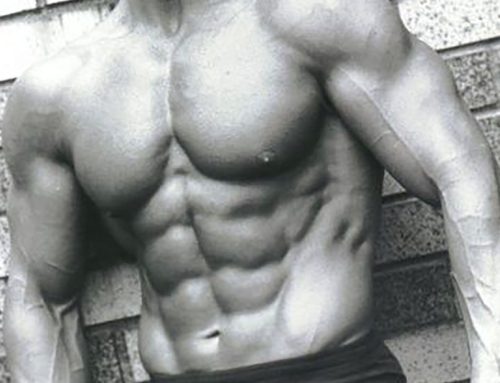
PS. Here’s my favorite ab routine of all time. I call it the “killer abs workout.” I used this ab program when I was in competition training. I trained my abs only twice a week and produced the results you see pictured above.
A1 Hanging leg raises
3 sets, 15-20 reps (or as many as you can do)
Superset to:
A2 Hanging knee ups (bent-knee leg raises)
3 sets, 15-20 reps
(no rest between supersetted exercises A1 & A2, 60 sec between supersets)
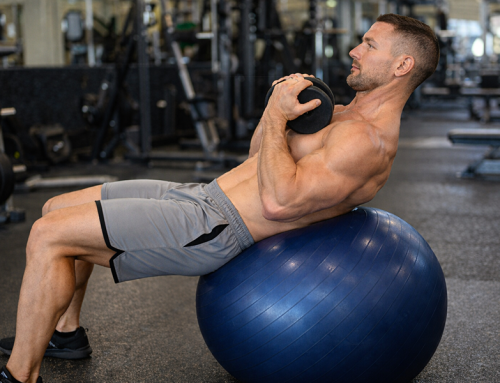
B1 Weighted swiss ball crunches (or weighted cable crunches)
3 sets, 15-20 reps
Superset to:
B2 Incline Bench Reverse crunches
3 sets, 15-20 reps
(no rest between supersetted exercises B1 & B2, 60 sec between supersets)
 About Tom Venuto
Tom Venuto is a natural bodybuilding and fat loss coach with 35 years of experience. He holds a degree in exercise science and has trained hundreds of clients in person and thousands online. He is also a recipe creator specializing in fat-burning, muscle-building cooking.
A former competitive bodybuilder, Tom is now a full-time evidence-based fitness writer, blogger, and author. His classic book Burn the Fat, Feed the Muscle is an international bestseller, first as an ebook and later as a hardcover and audiobook. His newest book. Extreme Fat Loss, which analyzes controversial diet and training programs, became an instant bestseller in 2025.
Tom’s work has been featured in Men’s Fitness, Oprah Magazine and dozens of other major publications. He is best known for his no-BS, evidence based approach to natural fat loss and muscle-building.
Tom is also the founder of Burn the Fat Inner Circle, a fitness support community with more than 59,000 members worldwide since 2006.

I know… All these folks in the gym who just came in to “slim” for the summer, doing 500 crunches at once and then not showing up till next week…
I know you’ll tell me I am wrong but I think spot reduction works for me after I drop first few pounds. I prob. do abs only once a week, as I dont’ want them to be bulging on me too much as on a guy, but I’ve noticed when I work on them more towards maybe the middle of a cutting cycle, they do seem to draw more from their subcutaneous fat than from my face. Same I noticed with hamstrings and glutes after frequent glute bridges (not squats or lunges)
Maybe it’s an illusion and it’s just me being grumpy and unclear in the head on low carbs :)
Thanks for posting Irina. There is no spot reduction in the sense that you do more ab exercises and lose more fat off your abs. There is a hypothesis about “spot lipolysis” and a tiny amount of spot reduction is actually possible with a workout protocol where you do abs and cardio alternating. You can learn more all about it including the studies here: https://www.burnthefatblog.com/is-spot-reduction-of-body-fat-possible-after-all/