
If you’ve spent any time in the weight loss world lately, you’ve almost certainly heard the term food noise.
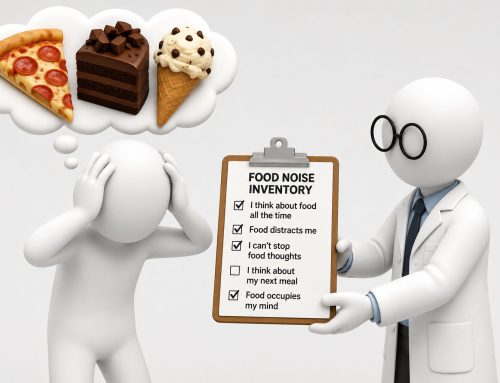
People describe it as constant thoughts about food and an endless mental chatter about what to eat, when to eat, and how much to eat.
For some people, it feels like food is always on their mind.
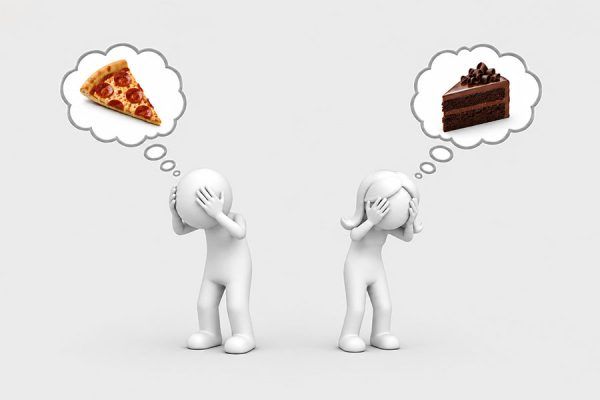
The term has become especially popular since the rise of GLP-1 weight loss drugs. Many people who take these medications report that the “food noise” disappears almost overnight.
But that raises an interesting question: Is food noise actually real? Or is food noise simply a new label for something we’ve always known as hunger, cravings, temptation, or emotional eating?
The answer is yes, food noise is real. But the answer is more complicated than most people think.
To understand why, let me tell you about one of the most fascinating studies ever conducted on human hunger.
The Most Extreme Example Of Food Noise Ever Recorded
Years ago, I read a fascinating book called The Great Starvation Experiment by Todd Tucker. The book tells the story of the famous Minnesota Starvation Experiment conducted during World War II.
The study wasn’t designed to help people lose weight. Researchers wanted to understand what happened to people during prolonged starvation and how best to rehabilitate victims of famine in Europe after the war.
Thirty-six healthy young men volunteered for the experiment. These weren’t overweight dieters trying to get beach lean. They were healthy, normal-weight men who agreed to undergo six months of semi-starvation under carefully controlled conditions.
Why would anyone want to be semi-starved for six months? The reason is, these men were conscientious objectors. They agreed so they could contribute to the war effort in a non-combat role.
During the study, their calorie intake was cut by roughly in half while they continued to perform physical activity and manual labor (which made tolerating the calorie deficit twice as brutal). Over time, they lost an enormous amount of weight. On average, they lost about 25% of their body weight.
Dropping a quarter of your body weight might not seem unusual in the age of Ozempic. But keep in mind that many of these men started around a lean 150 pounds. That means they finished at a skeletal 112 pounds.
Their faces became gaunt. You could see their ribs. Their strength dropped. Their energy disappeared.
But the physical effects weren’t the most interesting part. It was the psychological effects that were truly shocking.
Many of the men became obsessed with food. They collected recipes, read cookbooks for entertainment, talked about food constantly, and spent hours discussing meals they wanted to eat after the study ended. The only thing they could think about was food.
They even lost interest in sex. Think about that for a minute. Food had become such a powerful biological priority that thoughts about eating crowded out one of the strongest human drives.
Today, we might describe what they experienced as the most extreme case of food noise ever recorded.
No one can look at the Minnesota experiment and claim that constant thoughts about food aren’t triggered under certain circumstances. The human brain clearly responds to severe food deprivation by increasing attention to food.
From an evolutionary perspective, that makes perfect sense. If your body fat is totally depleted and you are starving, your brain wants you to solve that problem quickly.
What Starvation Did To The Minds Of Healthy Men
One reason the Minnesota study is so fascinating is that it revealed how powerful the biological drive to eat can become.
These men weren’t weak. They weren’t lacking discipline. They weren’t addicted to ultra-processed foods. They weren’t scrolling food videos on social media all day. They weren’t surrounded by fast food restaurants everywhere they went.
They were simply hungry. Very hungry. Starving, literally.
The study reminds us that when energy deprivation becomes severe enough, thoughts about food can become almost impossible to ignore. In that sense, food noise is unquestionably real.
But here’s where things get interesting.
The men in Minnesota were genuinely starving. They had lost a tremendous amount of weight. They had almost no body fat left. Their bodies were desperately trying to survive.
So their obsession with food makes sense. And that raises an even bigger question.
If food noise is driven by deprivation and loss of body fat reserves, why do so many overweight people experience it too?
Three Different Types Of Food Noise?
At first glance, the Minnesota Starvation Experiment seems to explain food noise perfectly. Starve people long enough and they become obsessed with food. Case closed. Except there’s one problem.
Many people who report food noise aren’t starving. Some aren’t even dieting. In fact, in the popular conversations today, the people most often complaining about the food noise problem are overweight and eating enough calories to maintain their body weight.
The more I thought about this, the more I realized that when people talk about food noise, they may be describing similar experiences that arise from very different causes – and completely opposite ends of the spectrum.
The Starving Man
The Minnesota volunteers were experiencing something close to true starvation. Having lost a quarter of their body weight or even more, their bodies were desperately trying to conserve energy and restore lost weight.
These men weren’t imagining their hunger. Their obsession with food wasn’t a lack of willpower. It was a normal biological response to severe energy deprivation.
If your body believes survival is at stake, your brain is going to make food a priority. In this situation, food noise makes perfect sense. Your brain flips a switch that screams the message, “Find food now! Eat! Eat!”
The Obese Dieter
Now consider a very different situation. Imagine someone who is significantly overweight and starts a serious fat loss program.
This person may have plenty of body fat stored for energy. In fact, they may have dozens or even over a hundred of pounds of excess body fat. Yet many people in this situation also report increased hunger, stronger cravings, and more thoughts about food.
Why?
One reason is that the body doesn’t simply adjust hunger and appetite signals based on the amount of body fat you’re carrying. It also responds to changes in your calorie intake.
When your calories drop substantially, your body notices. Hormones shift. Appetite increases. The drive to eat gets stronger.
This isn’t the same situation as the Minnesota volunteers.
An obese dieter with substantial body fat reserves is not experiencing starvation in the same way as a man with visible ribs and almost no body fat left. But both situations involve some degree of energy deprivation, which may increase thoughts about food.
The situations are not identical, but they’re not completely unrelated either: calorie insufficiency leads to an increase in physical hunger and a cognitive fixation on food.
The Overweight Person Who Isn’t Dieting
This is the scenario that’s most perplexing.
Imagine someone who is overweight but not actively dieting. They’re not losing weight. They’re not restricting calories. They’re not starving. In fact, they’re consuming enough calories to maintain their current weight. they have lots of body fat in storage.
Yet they still think about food constantly.
They may be planning their next meal while eating their current one. They may find themselves drawn to snacks even when they aren’t physically hungry. They may describe food as taking up far too much mental space.
This is where the starvation or calorie restriction explanation starts to break down. Because now we have to ask a different question: If the person isn’t starving, what else could be driving all these thoughts about food?
The Modern Food Environment Is Unlike Anything Humans Evolved For
One possible explanation is that we live in a food environment unlike anything our ancestors experienced.
Think about how often you’re exposed to food cues during a typical day. Food advertisements. Restaurant signs. Television commercials. Social media videos. Convenience stores. Office snacks. Food delivery apps.
Even if you’re not hungry, you’re constantly being reminded that food is available. And not just food – highly palatable food. Ultra-processed food specifically engineered to be rewarding, convenient, and difficult to resist.
It’s hard to know exactly how much of modern food noise is driven by these cues in our modern environment, but it would be surprising if they weren’t playing a big role.
When Food Becomes Forbidden, It Becomes Even More Tempting
Over the years, I’ve become increasingly interested in the psychology of restriction.
Early in my bodybuilding career, I was one of those chicken-and-broccoli guys. My diets were incredibly strict. I viewed foods as either “good” or “bad” and there was a long list of banned foods.
Looking back, I can now see how that mindset only made the forbidden foods more psychologically attractive. The longer I resisted the banned foods, the stronger the wanting to have them became.
I was always disciplined enough to stick to a contest diet for 3 or even 4 months without deviating once. But I was also always counting down every day to that post-contest feast, where I ate everything in sight.
Psychologists have studied similar effects for decades. Harvard researcher Daniel Wegner called it “ironic rebound theory”: Tell yourself not to think about something and, ironically, it gets even harder to stop thinking about it.
Don’t think about pizza. Do not make a mental picture of pizza in your head right now. Whoops. You just visualized a tasty cheesy slice, didn’t you?
If you create long lists of foods that you can never eat, the result is food noise. And this kind of food noise is psychological, not physiological.
That’s one reason I eventually became such a strong advocate for flexible dieting. I found that when people stopped labeling foods as forbidden and started building flexibility into their meal plans, food became less emotionally charged.
Maybe not always, because as I mentioned, constant exposure to food can increase thoughts about eating. But not labelling foods as good or bad, forbidden or allowed helps a lot, and two decades of research backs that up.
Stress, Sleep, Habits, And Other Hidden Drivers
There are other possible contributors to food noise as well.
Poor sleep has been linked to increased hunger and appetite. Stress can increase cravings and make highly rewarding foods more appealing.
Habit may also play a role. If you’ve eaten a salty, fatty snack every night at 8 PM when you watch TV for years, your brain may start cuing you to eat that snack at 8 PM whether you’re hungry or not.
Over time, these learned associations can become incredibly powerful. This is another example of how thoughts about food may have little to do with calorie intake or how much body fat is in storage, and much more to do with routine, reward, and conditioning.
Not All Food Noise Is The Same
This may be the most important takeaway from our entire discussion.
A starving man with almost no body fat and an overweight person who is maintaining their weight may both experience food noise. Both may think about food constantly. Both may struggle with cravings. Both may describe an endless mental chatter about eating.
But it would be a mistake to assume the cause is the same.
One may be experiencing a powerful biological response to severe energy deprivation combined with the loss of almost all body fat. The other may be responding to food cues, habits, stress, restriction psychology, highly palatable foods, poor sleep, or some combination of factors.
The symptom may look similar, but the underlying cause may not be.
So, Is Food Noise Real?
Food noise is absolutely real.
The Minnesota Starvation Experiment settled that question 80 years ago. But even if you never heard of this study until now, just being around the dieting and fitness community today you hear enough first-hand accounts to know it’s true – or, you’ve experienced it yourself.
Food noise affects the average dieter who is simply in a calorie deficit for fat loss – not starving literally. The human brain clearly responds to food deprivation by increasing attention to food.
But that’s only part of the story.
Food noise isn’t one thing. Sometimes it’s biology. Sometimes it’s psychology interacting with the environment. Most often, it’s both.
The real question isn’t whether food noise exists. The real question is what’s driving it in your particular situation.
Unfortunately there’s nothing we can do about the physiology side of things. If your calories are slashed to starvation levels, you’re going to be ravenous and thinking about food all day long, period.
But fortunately we do have control over much of the psychology and environment. For example, on the psychology side, you can practice flexible dieting, not rigid dieting. Plus, you can partly control your environment, at least your home environment, and reduce your exposure to food cues.
There are many practical, evidence-based ways to reduce food noise naturally. In fact, I’ve put together an entire guide covering eight strategies that can help quiet the mental chatter about food, without relying on medication.
Inner Circle members can read that article here:
Cut The Food Noise: 8 Ways To Silence The Chatter Without Drugs
Not a member yet? Learn more about the Inner Circle here
-Tom Venuto
Founder of Burn the Fat Inner Circle
Author of Burn the Fat, Feed the Muscle
PS. Learn more about flexible dieting and flexible meal planning here: The Guide To Flexible Meal Planning For Fat Loss
 About Tom Venuto
Tom Venuto is a natural bodybuilding and fat loss coach with 35 years of experience. He holds a degree in exercise science and has trained hundreds of clients in person and thousands online. He is also a recipe creator specializing in fat-burning, muscle-building cooking.
A former competitive bodybuilder, Tom is now a full-time evidence-based fitness writer, blogger, and author. His classic book Burn the Fat, Feed the Muscle is an international bestseller, first as an ebook and later as a hardcover and audiobook. He is also the author of Meal Prep For Fat Loss, a practical guide to smart shopping, batch cooking, and kitchen strategies that make healthy eating simple and sustainable.
Tom is also the founder of Burn the Fat Inner Circle, a fitness support community with more than 59,000 members worldwide since 2006.
Tom’s work has been featured in Men’s Fitness, Muscle & Fitness, Oprah Magazine and dozens of other major publications. He is best known for his no-BS, scientific approach to natural fat loss and muscle-building.



Leave A Comment