
You’ve probably heard people with fit bodies say, “I’m 58 years old, but my biological age is more like 43.” That’s a good thing, because differences between biological and chronological age like that are legitimately possible, and my 58th b-day is right around the corner!
Researchers are now applying a similar idea to the brain. Using MRI scans and artificial intelligence, they can estimate whether a person’s brain appears younger or older than their actual chronological age. They’re calling it your estimated brain age.
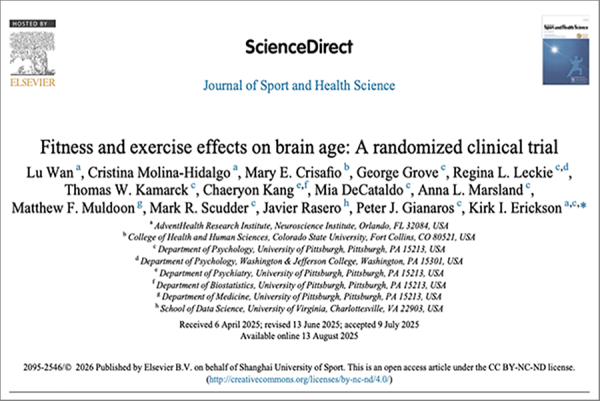
A new randomized clinical trial strongly confirms earlier research that suggested regular aerobic exercise may help keep your brain younger than your chronological age. If you’ve ever wondered whether cardio is really necessary when you already lift weights and eat well, this study provides one more compelling reason not to skip it.
What the Researchers Did
Researchers recruited 130 healthy but relatively inactive adults between the ages of 26 and 58 and randomly assigned them to one of two groups. One group followed a supervised aerobic exercise program for 12 months, while the control group continued their usual lifestyle.
The exercise program wasn’t extreme. Participants worked toward the standard public health recommendation of 150 minutes of aerobic exercise per week—about 30 minutes a day, five days a week. Activities included brisk walking, jogging, cycling, rowing, elliptical training, and similar forms of aerobic exercise.
The workouts started at a moderate intensity and gradually progressed to moderate-to-vigorous intensity. Moderate intensity generally means you’re breathing harder than normal but can still carry on a conversation (think of a brisk walk or an easy bike ride). Vigorous exercise means your breathing becomes much heavier and carrying on a conversation becomes difficult, such as during running or fast cycling. Participants weren’t expected to perform all-out, exhausting workouts. The goal was consistent aerobic exercise performed week after week.
The researchers measured aerobic fitness using a laboratory treadmill test (VO₂peak), the gold standard for measuring cardiorespiratory fitness. They also measured brain age using MRI scans analyzed with machine learning.
What They Found
After one year, the exercise group showed an improvement in estimated brain age compared to the control group. On average, their brains appeared about 0.6 years younger, while the control group showed no meaningful improvement. (Imagine the improvement after multiple years of consistent cardio!) As you would expect, participants in the exercise group also significantly improved their aerobic fitness.
Researchers also observed that participants who were more aerobically fit at the start of the study tended to have younger-looking brains. While this doesn’t prove cause and effect (he fitter people may also have been eating better, sleeping better, avoiding alcohol, and practicing other healthy habits), it supports previous research linking better cardiorespiratory fitness with healthier brain aging.
That’s one reason this study is especially valuable. Instead of simply observing people, the researchers randomly assigned participants to either an exercise program or a control group. That makes it much more likely that the improvements in estimated brain age were caused by the exercise itself rather than by other healthy lifestyle habits.
Why 150 Minutes Per Week Matters
One thing I appreciated about this study was that the exercise prescription wasn’t unrealistic.
The participants aimed for 150 minutes of aerobic exercise per week, which is the same minimum recommendation endorsed by organizations such as the American Heart Association, the American College of Sports Medicine, and the U.S. Physical Activity Guidelines. That’s only about 30 minutes a day, five days a week.
Those same organizations also point out that additional aerobic exercise – up to about 300 minutes per week – may provide even greater health benefits. This particular study wasn’t designed to determine whether more exercise would produce even greater improvements in brain age, so we can’t answer that question yet. But it does suggest that meeting the standard recommendation is an excellent place to start.
How Might Cardio Help the Brain?
Scientists aren’t yet 100% certain exactly how aerobic exercise helps keep the brain healthy, but they have several good theories.
Regular aerobic exercise improves blood flow to the brain, supports healthier blood vessels, reduces chronic inflammation, improves insulin sensitivity and overall metabolic health, and may increase growth factors such as brain-derived neurotrophic factor (BDNF), a naturally occurring protein that helps brain cells grow and form new connections.
Interestingly, the researchers examined several possible explanations – including improvements in aerobic fitness, body composition, blood pressure, and BDNF – but none completely explained the improvements in brain age. That doesn’t mean those factors aren’t important. It simply suggests the benefits are probably the result of multiple biological processes working together rather than one single mechanism.
Strengths of This Study
All research has potential limitations but this was a strong study because was a randomized controlled trial – the strongest design for testing cause and effect.
The intervention lasted a full year rather than a few weeks. The exercise program reflected realistic public health recommendations instead of an extreme training protocol. Finally, both aerobic fitness and brain age were measured objectively using laboratory testing and MRI scans rather than self-reported questionnaires. Perhaps most importantly, these findings agree with a growing body of previous research showing that aerobic exercise supports healthy brain aging.
It was a randomized controlled trial, which is the strongest study design for testing cause and effect. The intervention lasted an entire year rather than just a few weeks. The exercise program reflected realistic public health recommendations instead of an extreme training protocol. Finally, both aerobic fitness and brain age were measured objectively using laboratory testing and MRI scans rather than self-reported questionnaires.
Perhaps most importantly, these findings agree with a growing body of previous research suggesting that aerobic exercise supports healthy brain aging.
Keep Prioritizing Resistance Training, But Don’t Skip Your Cardio Training!
I’ve been saying for years that resistance training is one of the best investments you can make in your long-term health. It builds muscle, preserves strength, supports bone density, and helps you stay active and independent as you age.
But don’t make the mistake of treating cardio as optional.
This study adds to growing evidence suggesting that aerobic exercise provides unique benefits for your brain that strength training alone may not fully deliver.
If you’re already getting about 150 minutes of aerobic exercise each week, keep it up. If you’re not, think of this as one more reason to start. You don’t have to become a marathon runner. A brisk walk, cycling, rowing, swimming, hiking, or any activity that regularly gets your heart and lungs working may help your brain stay younger than your chronological age for years to come.
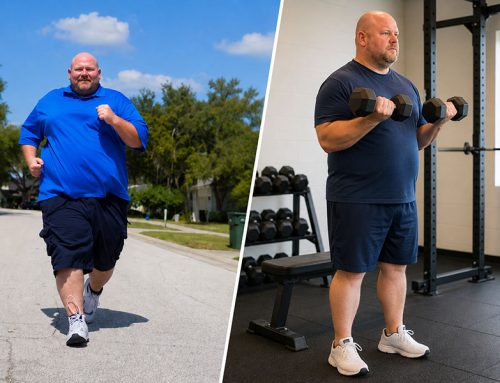
The bottom line? Don’t think of strength training and cardio as competing forms of exercise. They complement each other. Lift weights to preserve muscle, strength, bone density, and independence. Do aerobic exercise to strengthen your heart, improve your fitness, and quite possibly help keep your brain younger than your chronological age.
For healthy aging, the winning combination is both.
-Tom Venuto
Founder of Burn the Fat Inner Circle,
The community for all-natural No BS Body Transformation
Not a current member? Join us in the Burn the Fat Inner Circle Members Area HERE
Featured program of the week: The Burn The Fat Guide To Meal Prep For Fat Loss



Leave A Comment