
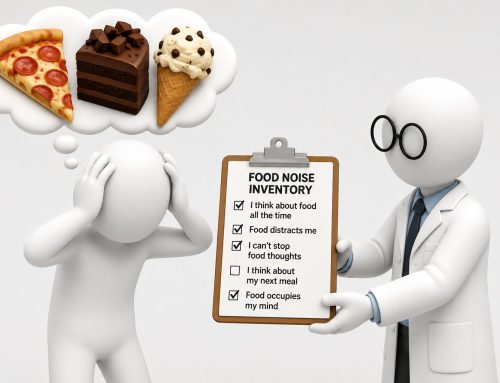
Have you ever wanted a food even though you weren’t physically hungry?
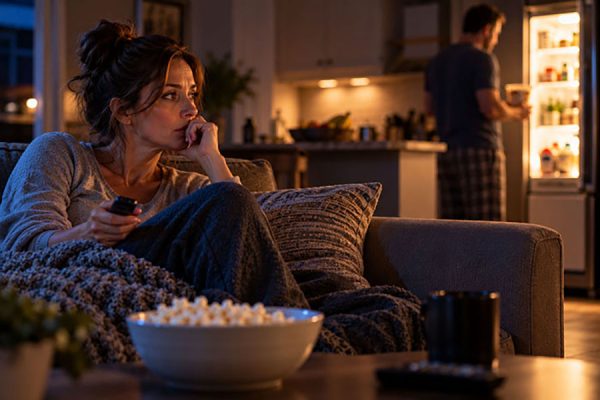
Maybe you sat down to watch TV and found yourself craving ice cream even though you just ate dinner half an hour ago.
Maybe someone walked into the kitchen, opened the refrigerator, and suddenly you wanted something to eat too, even though you hadn’t had a single thought about food before that.
Or maybe you walked into a coffee shop just to get coffee, smelled something familiar, and suddenly wanted food even though it hadn’t crossed your mind five minutes earlier.
Cravings or urges like these can seem random. But often, they’re not. Your brain learns what predicts a reward. And once those associations become strong enough, a sight, smell, place, time of day, routine, or even an emotional thought can trigger the urge to eat.
To understand how that happens, it helps to start with one fascinating distinction researchers make about food reward…
“Liking” And “Wanting” Are Not The Same Thing
Scientists who study food reward make an important distinction between liking and wanting.
Liking is pretty much what it sounds like. It’s the pleasure you get when you eat a food.
Wanting is different. It’s the motivation or urge that makes you seek the food out in the first place.
These two processes overlap, but they’re not the same. They even involve partly different systems in the brain.
That means you can strongly want a food without getting an equally large amount of pleasure when you actually eat it.
Or it can work the other way around: You can like a food without wanting it. I definitely like pizza, but I hardly ever want it.
Think about that for a minute.
Have you ever done one of those things – like sit in front of the TV and suddenly you feel an urge to eat something, though you weren’t physcially hungry at all?
That’s the wanting system at work. Neuroscientists have an impressive-sounding term related to this: Incentive salience.
In plain English, incentive salience refers to the motivational pull that a reward and the cues associated with that reward – can acquire.
That brings us to another important part of the cravings puzzle:
Your Brain Learns What Predicts A Reward
Your brain is constantly learning from experience. Eat something highly rewarding, and your brain doesn’t only remember the food. It can also learn what was happening around you when you ate it:
The sight of a food package.
The smell of food.
The room you’re in.
The time of day.
The people you’re with
The television program you’re watching.
The convenience store you pass on your drive home.
All these things can become eating cues.
Also, through a process called reward learning, your brain learns that certain cues predict something rewarding. (“This is gonna be good, and I’m gonna feel good”).
Over time, the cue itself can trigger wanting – even if it’s not the sight or smell of the food itself (It’s a time or a place).
The sequence might look something like this:
Cue → Wanting → Eating → Reward
Repeat that sequence often enough and the association can become surprisingly strong.
That’s one reason cravings can seem to come out of nowhere. Except they didn’t necessarily come out of nowhere. Something may have triggered them. And this can happen even if you’re not physically hungry.
Research on food cue reactivity supports this idea. In a meta-analysis of 45 studies involving more than 3,000 people, food cue reactivity and cravings significantly predicted eating behavior and weight-related outcomes.
And this is where ultra-processed foods become especially interesting.
Ultra-Processed Foods And Your Brain’s Reward System
Many ultra-processed foods combine refined carbs, fats, salt, intense flavors and textures in ways that make them extremely easy to eat and highly rewarding. (These are common features of many ultra-processed foods).
They’re also convenient. Open the package and eat. No chopping. No cooking. No preparation. And guess what? Convenience is one of the biggest influences on what you eat.
Researchers are still working out exactly how food processing affects the brain and appetite, so we shouldn’t get ahead of the science.
But we already know that food reward involves a network of brain areas – sometimes called the reward circuitry – involved in motivation, learning and our responses to food cues.
Dopamine is involved too. You’ve probably heard dopamine called the “pleasure chemical,” but that’s an oversimplification. Dopamine plays an important role in motivation, learning and the pursuit of rewards – in other words, wanting.
I’ll circle back to explaining dopamine more in another article in the future. But for now, let’s just say that when we put all of this together, you can see why “Just don’t eat the junk food” isn’t especially useful advice.
You already knew that eating less ultra-processed food was probably a good idea.
It’s kind of like the advice, “eat less, exercise more.” It’s basically correct, but not very useful. Or the financial analogy where people with financial woes are told: “Just spend less and earn more.”
Yeah right, “Just” – as if it’s easy or we are all supposed to know how.
The real question and more difficult issue to tackle with managing your calorie budget is: How do you actually do it when you’re in the moment of craving the stuff?
Here are 6 strategies that can help.
1. Reduce The Cues
Yes, this includes the old advice not to keep foods you routinely overeat sitting around the house. But now you understand why.
If seeing the cookies every time you walk into the kitchen triggers wanting, you’re repeatedly exposing yourself to the cue. You don’t get extra points for making yourself resist something twenty times a day.
So put tempting foods out of sight. Don’t leave them sitting on the counter in plain view. Out of sight, out of mind.
And if a specific food is a true binge trigger for you, it may be smartest not to keep it in the house at all, at least for now.
That’s not the same as banning the food. You can still have ice cream. But you don’t need a half gallon sitting ten steps away from you 24 hours a day.
2. Create Friction
Friction is anything that makes an impulsive decision harder to act on. The more steps, effort or cost you put between the impulse and the action, the more chances you have to stop and think, and the more often the impulse loses.
Remember the advice to keep binge trigger foods out of the house completely? People sometimes push back on me: “That’s fine, Tom, but if I really want it, I’ll just go to the store and buy it.” Exactly. That’s the point.
When the ice cream is ten feet away in the freezer, giving in takes about 30 seconds. When it’s not in the house, you have to get dressed, put on your shoes, grab your keys, drive to the store, find it, stand in line, pay for it and drive back home. Could you still do it? Sure. But you’ll do it a lot less often, because you’ve turned a 30-second impulse into a 30-minute project.
Smaller doses of friction help too. Don’t eat straight from the bag or carton. Portion it out first and put the package away. Buy single servings instead of the family size.
3. Raise The Stakes
You can also make giving in costlier. Behavioral scientists call these commitment devices: decisions you make in a calm or strong moment that lock in your choices before the craving shows up.
One version is financial. Hire a coach, pay at least three months in advance with no refunds, and commit to weekly check-ins where you show your food logs. When you’re about to give in to an urge, you know you’ll be reporting it to someone, and you’ve already paid for results. That’s a powerful one-two punch of money and accountability.
Another version is social. Announce your goal, but with one important twist: be specific. Research suggests that announcing big fitness goals, especially to everyone in public, can sometimes backfire. (Though it can be quite effective in a 100% supportive community like our Burn the Fat Inner Circle).
So instead, consider announcing a behavior: “No ice cream after dinner on weeknights for the next 30 days.” Then ask a friend to check in with you. Break your pledge, and you either have to own up or hope nobody asks. Either way, giving in just got a lot more expensive.
None of this makes foods forbidden. It simply puts distance, effort or a price tag between the impulse and the action. And sometimes that’s all it takes to interrupt an automatic behavior.
4. Replace, Don’t Just Remove
Suppose you’ve developed a routine: Sit down to watch TV → eat ice cream.
If your new plan is: Sit down to watch TV → eat NOTHING, then you’ve removed a familiar reward and left an empty space where the old behavior used to be. Did you ever hear that saying, “A void tends to be filled?” It’s true in many ways.
So, to avoid that void filling right back up with the usual temptation or simply a different one, try replacing the eating processed food routine instead of doing nothing. Maybe it’s air-popped popcorn. Maybe it’s a cup of tea or another non-calorie beverage. Maybe it’s a chocolate protein shake. Maybe it’s swapping it for Greek yogurt and fruit.
And by the way, you did know you can make Burn the Fat, Feed the Muscle ice cream with Greek yogurt, fruit, and protein powder didn’t you?
(Hint: check out the Burn the Fat Inner Circle recipe department. There are many flavors, my friend).
The replacement doesn’t have to perfectly imitate the food you’re trying to eat less often though. The point is that replacement is better than removal whenever that’s possible.
5. Delay – Don’t Prohibit
When a craving hits, instead of saying: “I can’t have that,” try saying: “I can have it if I still want it. But i’m going to wait 15 minutes first… maybe I won’t even want it by then.”
Then get out of the kitchen. Do something else. Have the alternative you planned. Take a walk. (Research shows even a brisk 15-minute walk can reduce cravings!) Let some time pass between the impulse and your response.
Cravings don’t always keep getting stronger until you finally give in. In fact, there’s a name for riding out a craving instead of fighting it or giving in: urge surfing. Rather than trying to make the craving disappear, you notice it mindfully without judgement, watch it rise, peak and fade, and let it pass.
And if 15 minutes later you still consciously decide you want the food? Fine. Have a reasonable portion and enjoy it (slowly and mindfully – don’t inhale it!)
That’s very different from automatically reacting mindlessly to every craving the moment it appears.
One heads-up: when you stop giving in automatically, your cravings may get louder before they get quieter. Behavioral scientists call this an extinction burst. “Extinction” is the process where a cue gradually loses its pull once it stops being followed by the reward. But when an expected reward suddenly doesn’t show up, the brain can push harder for a while before it adapts. It’s the same reason people jab the elevator button harder when the elevator doesn’t come. So if the first week feels like the hardest, that doesn’t mean it isn’t working. It may mean it is.
6. Don’t Show Up Starving
Remember how cues can trigger wanting even when you’re not physically hungry? There’s a flip side: when you’re hungry, those same cues hit much harder.
Hunger doesn’t just make you want food more. It makes food taste better, too. Scientists call this alliesthesia, a fancy word for a simple idea: how good a food seems depends on your body’s internal state. It’s why a plain sandwich tastes amazing after a long hike, and why the drive-through looks irresistible when you skipped lunch.
So if evenings are your craving danger zone, don’t arrive there running on empty. Eat regular, satisfying meals with plenty of protein and fiber during the day, and if there’s a long gap before a high-risk time, plan a snack. You’ll still face the cues, but they’ll have a lot less firepower.
(And for the love of six pack abs, don’t go shopping hungry! Go food shopping after you’ve eaten a nice filling meal.)
Your Cravings Aren’t As Random As They Seem
What you just read is only one part of the cravings puzzle.
Maybe your cravings have less to do with what’s in your cupboard and more to do with stress, boredom or a rough day. Maybe the stricter your diet gets, the louder your cravings get. Or maybe your toughest moments happen at work, at parties, at restaurants or over the holidays, where you can’t control what’s around you.
That’s why I created my new course, How To Beat Food Cravings
This program gives you not one, but 24 research-supported strategies: 10 psychological techniques to help you manage cravings and strengthen self-control, plus 14 behavioral and environmental strategies to make healthy eating easier and more automatic.
If you finally want to get control over your cravings, end over-eating, and achieve the health and ideal weight you want – without cutting our your favorite foods – visit this page to learn more ==> How To Beat Food Cravings – The Complete Course
The course is 50% off during our new release week, until November 7th, then it goes up to the regular price.
–Tom Venuto
Founder of Burn the Fat Inner Circle:
The Support Community For Health-First, All-Natural Body Transformation
Creator of How To Beat Food Cravings – The Complete Course
Scientific References:
Hall KD, et al. Ultra-Processed Diets Cause Excess Calorie Intake and Weight Gain: An Inpatient Randomized Controlled Trial of Ad Libitum Food Intake. Cell Metabolism, 30(1):67–77, 2019
Morales I, Berridge KC, “Liking” and “wanting” in eating and food reward: Brain mechanisms and clinical implications. Physiology & Behavior, 27:113152, 2020
Boswell RG, Kober H, Food cue reactivity and craving predict eating and weight gain: a meta-analytic review. Obesity Reviews, 17(2):159–177, 2016
Ledochowski L et al, Acute Effects of Brisk Walking on Sugary Snack Cravings in Overweight People, Affect and Responses to a Manipulated Stress Situation and to a Sugary Snack Cue: PLOS ONE, 10(3), 2015.
Bogarde, J et al, Convenience as a dimension of food environments: A systematic scoping review of its definition and measurement, Appetite, 194, 107198, 2024.
Lerman DC, Iwata BA. Prevalence of the extinction burst and its attenuation during treatment. Journal of Applied Behavior Analysis. 28(1):93–94, 1995
 About Tom Venuto
Tom Venuto is a natural bodybuilding and fat loss coach with 35 years of experience. He holds a degree in exercise science and has trained hundreds of clients in person and thousands online.
A former competitive bodybuilder, Tom is now a full-time evidence-based fitness writer, blogger, and author. His classic book Burn the Fat, Feed the Muscle is an international bestseller, first as an ebook and later as a hardcover and audiobook. He is also the author of Meal Prep For Fat Loss, a practical guide to smart shopping, batch cooking, and kitchen strategies that make healthy eating simple and sustainable.
Tom is also the founder of Burn the Fat Inner Circle, a fitness support community with more than 59,000 members worldwide since 2006.
Tom’s work has been featured in Men’s Fitness, Muscle & Fitness, Oprah Magazine and dozens of other major publications. He is best known for his no-BS, scientific approach to natural fat loss and muscle-building.
Leave A Comment