
What causes your food cravings? Is it a nutrient deficiency?
If you crave chocolate, does that mean you’re low in magnesium? If you crave red meat, could your body be telling you that you need iron? If you’re craving cheese, do you need calcium?
You may have seen explanations like these online. They sound plausible. It would be pretty cool if your body had a built-in nutritional warning system that made you crave exactly the food containing a nutrient you needed.
There’s just one problem: That’s probably not what your cravings are telling you.

Are Food Cravings Really Caused By Nutrient Deficiencies?
Researchers have been studying food cravings for decades, and the evidence that ordinary cravings for specific foods are caused by specific nutrient deficiencies is surprisingly poor.
In 2000, Antonio Cepeda-Benito and colleagues published research describing food cravings as “complex, multidimensional motivational states.” What that means is cravings can involve physical hunger, and also thoughts about food, emotions, environmental cues, and expectations of pleasure from eating.
Twenty years later, psychologist Adrian Meule reviewed the research on food cravings and came to a similar conclusion about the nutrient deficiency theory: The evidence is weak. He noted that simple connections between a nutrient deficiency and craving a food containing that nutrient probably explain only a small fraction of the cravings you’re feeling.
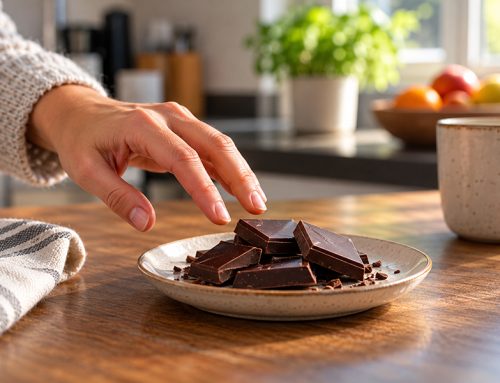
Take chocolate, the number one most craved food. It’s a common claim that craving chocolate means you need magnesium. Chocolate does contain magnesium, so the explanation sounds convincing.
But if your body were desperately trying to get more magnesium, why would it make you dream about chocolate instead of beans, nuts, seeds, or leafy green vegetables which are all high in magnesium or even higher than chocolate?
There are exceptions where physiological deficiencies can influence appetite. But for the ordinary cravings most of us experience, there’s a much more interesting explanation…
Sometimes You Crave A Food Because You Told Yourself You Can’t Have It
Years of research has confirmed this.
Imagine you decide to start a diet on Monday. You decide that means no more chocolate. No more cookies. No more ice cream. No more pizza. You pledge to eat zero. (Because you think that’s what it takes).
Mentally, you divide foods into two categories: Good foods and bad foods. Allowed foods and forbidden foods.
And what happens when you tell yourself you absolutely cannot have a certain food? You very often start wanting it even more. In psychology we’ve known about this for decades and there’s a name for it: The ironic rebound effect.
The recent research (Meule et al) reviewed experiments on what they called “selective food deprivation.” In these studies, people were instructed to avoid specific foods such as chocolate, bread, and other highly desired foods, while following an otherwise normal diet that was not highly restricted in calories.
Almost all the studies found that cravings for the food that was forbidden increased, at least over the short term and especially in people susceptible to cravings or frequently attempting restrictive diets.
Because the participants weren’t depriving themselves of total calories or nutrients, only certain specific foods, an actual nutrient deficiency was unlikely to explain the increased cravings.
In other words, you may not crave chocolate because you’re deficient in magnesium. You may crave chocolate because you’ve banned chocolate – or in your mind you simply consider it a “bad food” because it’s processed and high in sugar.
The lesson is that perceived deprivation can be a powerful source of cravings. Ie, you tend to want what you’re not allowed to have.
The Forbidden-Food Trap
This is one reason I’ve never been a fan of rigid diets that divide everything you eat into “good” and “bad” foods. The minute you label a favorite food forbidden, you’ve made it a trigger.
Now you’re thinking about it. You may try not to think about it, but that doesn’t work. You notice ads or photos of the food. You notice it when someone else is eating it. You start counting how many days you’ve gone without it.
Then finally on one stressful day, you cave in, eat some and think: “I blew my diet.”
And that can turn into: “Well, I already blew it, so I might as well finish the whole thing. I’ll start over on Monday.”
Psychologists call that the “what the hell effect.” (Seriously – there are scientific studies about the What the hell effect).
That’s why this one strategy for managing cravings may sound counterintuitive: Stop making your favorite foods completely forbidden.
A flexible approach to eating lets you build most of your diet around nutritious whole foods while still allowing reasonable amounts of foods you enjoy.
One piece of chocolate doesn’t ruin your diet. Neither does a slice of pizza or an occasional dessert.
And when you know you can have a food, you may discover that you don’t feel such an overwhelming urge to have it, let alone binge on it.
So What Really Causes Food Cravings?
There’s no single cause of cravings. Physical hunger and calorie restriction can contribute. So can environmental cues, learned associations, emotional states and especially stress.
Simply seeing highly rewarding food can make you crave it, even if you’re not physically hungry. (Even pictures or visualizing the food in your mind can trigger cravings).
That’s why the next time a craving hits, instead of immediately asking:
“What nutrient am I missing?” Ask: “What’s really triggering this craving?”
Did you see or smell something? Are you stressed, tired, bored, or upset? Is this a habitual craving that hits at the same time every night? Have you subconsciously linked one behavior like watching TV with mindless snacking?
And here’s another question worth asking: Have you been telling yourself you’re never allowed to eat this food? In other words are you a rigid dieter rather than a flexible dieter?
The answer might tell you more about the actual cause of your craving than anything else.
There’s no doubt that banning foods or looking at foods as forbidden or allowed can increase cravings for the very foods you’re not allowing yourself to have.
And this is why becoming a flexible dieter might be the most effective strategy to beat cravings and end bingeing
However, as I mentioned above, there are many causes of cravings, and that means there are many solutions to manage them.
Once you know your craving triggers, you can eliminate them when that’s possible, and when you can’t, you can use psychological strategies to manage your cravings.
That’s why I created my new course, How To Beat Food Cravings
This program gives you not one, but 24 research-supported strategies: 10 psychological techniques to help you manage cravings and strengthen self-control, plus 14 behavioral and environmental strategies to make healthy eating easier and more automatic.
If you want to get control over your cravings, end over-eating, and achieve the health and ideal weight you want – without cutting out your favorite foods – visit this page to learn more ==> How To Beat Food Cravings – The Complete Course
The course is 50% off during our new release week, until November 7th, then it goes up to the regular price.
–Tom Venuto
Founder of Burn the Fat Inner Circle:
The Support Community For Health-First, All-Natural Body Transformation
Creator of How To Beat Food Cravings – The Complete Course
Related:
How To Stop Snacking At Night
How To Stop Food Cravings (12 Strategies)
How To Control Food Cravings – 5 Scientific Strategies)
Is Food Noise Real?
The Food Noise Test Explained
Food Craving Triggers And Your Brain
The Exercise That Can Stop Sugar Cravings



Leave A Comment