
Cilantro lime rice is one of those recipes that sounds simple. After all, it’s just a side dish, but small prep and cooking details make a big difference.
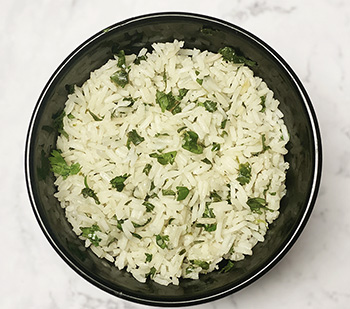
After making stovetop cilantro lime rice countless times, I like my homemade version better than Chipotle’s.
This is restaurant-quality rice, but it’s different: It’s toasted, has brighter lime flavor, much more herby cilantro, and a richer taste from cooking the rice in broth instead of water.
That bright lime flavor comes from the secret ingredient – limes. Yes, I know that’s not exactly a secret since lime is in the recipe name.
But I don’t just mean lime juice from a bottle. I’m talking about fresh lime zest that goes in the pot in addition to the fresh squeezed lime juice that goes in the rice after it’s cooked.
Why Fresh Lime Zest And Juice Makes This Rice Better
In case you’re unfamiliar, the zest is the peel (skin) of the lime. It’s also known as the rind. It’s the green stuff – just the outer later, not the whiter pith below which is more bitter.
I use a microplane zester and it works beautifully for zesting lemons and limes because of the razor sharp teeth which give you very fine, almost “airy” zest without getting into the pith. Regular zesters and graters give you larger strips of zest.
For this recipe, one large lime does the trick (or two small ones). After you’ve zested it, then you can juice the lime which you’ll add to the rice after it’s cooked. If you don’t have a lime on hand, you could use bottled lime juice and skip the zest, but it won’t be the same without the fresh juice and zest of fresh lime.
Important note when you’re lime shopping: Limes come in different sizes. The small ones, called key limes, are just slightly larger than a golf ball. The larger ones are called Persian limes.
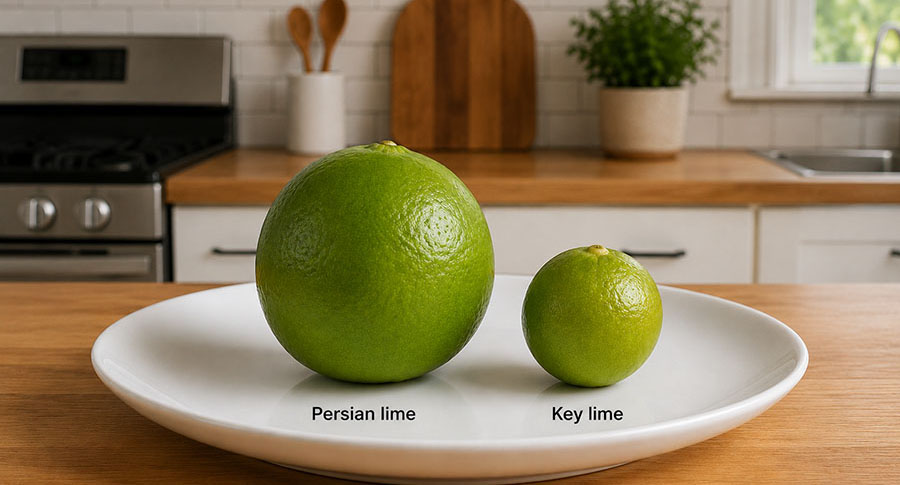
This matters because the small ones might give you only 1.5 to 2 tablespoons of juice (and less zest) while the large ones will give you close to 3 tablespoons of fresh squeezed juice (and plenty of zest, including enough to reserve and sprinkle on after cooking).
This also matters because key limes are more tart, which is why they are commonly used in key lime pies, marinades, and cocktails. Persian limes have a milder flavor and are more versatile for everyday cooking, including being ideal for cilantro lime rice.
If you’re stuck with the small limes, no worries, but you’ll probably need two of them.
Why The Stovetop Method Makes Better Cilantro Lime Rice
There are two tricks to get restaurant quality cilantro lime rice – or even “better than Chipotle” cilantro lime rice at home.
One is to briefly toast the rice in a small amount of olive oil for a few minutes before adding the liquid. This is not a mandatory step. You could dump in the rice and liquid at the same time and you’re off to the races. However, toasting is the official Mexican / Spanish method.
The toasting of the rice does something extra: it triggers the Maillard reaction, creating nutty, rich flavor compounds. It may also help prevent rice that sticks together in clumps or gets gummy. (When toasted, this rice comes out slightly moist yet fluffy – never clumpy).
While toasting for 3 minutes as instructed below, stand over it and stir regularly so it doesn’t burn. The idea is to lightly toast it. When you see slightly browned spots on some of the rice grains, it’s done. If you over toast you may find yourself with crunchy rice – and no one wants that.
How To Make Cilantro Lime Rice With Fewer Calories (And Still Keep The Flavor)
One thing I don’t do is drown the rice in oil or butter. Most cilantro lime rice recipes will use at least two or even three tablespoons of oil. You don’t need that much. One tablespoon is plenty.
I almost always reduce the fats to save calories. I’ve earned the nickname “two teaspoon Tom” because I’m often stingy with oils, but I just can’t understand why people drown everything in oil. I do use one full tablespoon (three teaspoons) of olive oil for this recipe so there’s enough to toast the rice and reduce the chance of burning.
I don’t argue that the rice might taste even better with butter (or both olive oil and butter), but if you know me, then you know I’m a calorie-saving, macro-optimizing home cook, so I pass on butter and large amounts of oil.
Why Broth Makes Stovetop Rice Taste Better
Another taste enhancer is to use chicken (or vegetable) broth instead of water. You could use water, but then you’re going to need to add salt.
The broth adds savory depth and saltiness. (Which is why you shouldn’t use sodium-free broth).
If you’re looking to keep the sodium in check, use a reduced sodium broth – some brands have reduced sodium broth – often 30% to 50% less sodium.
Seasonings And Oil For Restaurant-Style And Home Cooked Cilantro Lime Rice
People often ask about the ingredients and seasonings that Chipotle restaurants use because they want to copycat their recipes.
It looks like their cilantro lime rice recipe is fairly simple. They use fresh chopped cilantro, and of course the lime juice. Their website says they steam the rice (in a huge commercial rice cooker) with rice bran oil and bay leaves. I think it’s worth trying a bay leaf in a future batch, but I wasn’t trying to make an exact Chipotle copycat recipe.
Also, almost no home cook has rice bran oil on hand, so that’s why I didn’t use it in this recipe. I use olive oil. You could use avocado oil or a neutral oil like canola if that’s what you have in your cupboard. I don’t like using ingredients for my public-shared recipes that are not common staples in the home. That said, I’d be willing to give rice bran oil a try one day and see how it tastes.
Another difference in my recipe is that I use garlic. (Because garlic is awesome). A couple of cloves is all it takes – this rice is supposed to taste like lime and cilantro, not be garlic-forward. The garlic is added as the rice is finishing toasting, a minute before you pour in the broth.
In my recipe, the seasoning starts with the chicken broth, which adds flavor and saltiness. When the rice is finished, after fluffing it and adding the lime juice and cilantro, taste test it. If it tastes flat you can add a pinch of salt.
Don’t over salt though – it shouldn’t taste salty. The salt, if you choose to use it, is simply meant to help make the citrus flavors pop. That’s one of the things salt does – it enhances flavors.
Rice Cooker Vs Stovetop Rice Cooking
I used to depend on the rice cooker almost exclusively because it’s so easy and I am inherently lazy, but now I use the stovetop method just as often if not more so. Always when I want gourmet-quality rice at home.
The stovetop cilantro lime rice cooking technique is simple: after toasting the rice for a few minutes and leaving the garlic in there a minute, add the broth and bring it up to a roiling boil. Then turn the heat all the way down to low, cover the rice and let it simmer for about 17 to 18 minutes or until it is cooked through and has absorbed almost all of the liquid.
For the stovetop, use a large pot, sauce pan, or dutch oven. You can get a good stainless steel pot for around 30 or 40 bucks, give or take. You probably already have one in your kitchen.
When I got serious about cooking, I splurged and invested in the cast iron 3.75 qt Staub pot (French Oven). It has never turned out anything but a perfect pot of rice. Looks beautiful, cleans easily and will last a lifetime. The Rolls Royce of Rice cooking pots… the luxury “cheat code” for rice.
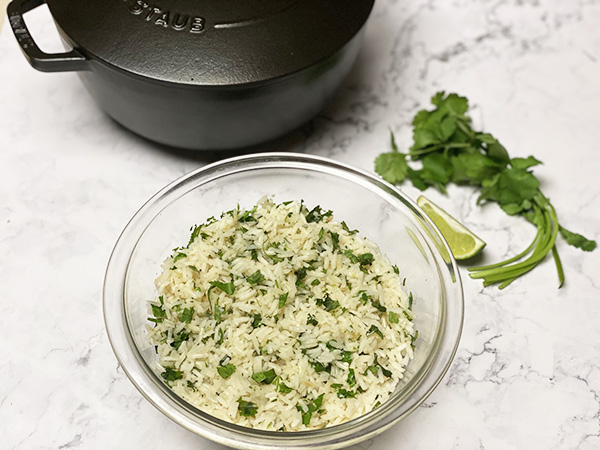
Tip: This recipe was tested with white basmati rice. It has great flavor and is a perfect match for this cilantro lime recipe. Regular long grain white rice is fine too if that’s what you have on hand, but cook time might be different. Brown rice is a completely different animal that requires a completely different set of instructions.
Cook Time For Stovetop Rice (With White Rice)
As it cooks, keep your rice covered, undisturbed for 17 to 18 minutes. The white basmati is always done for me by 18 minutes, but depending on your stove, cookware, and type of rice, your cooking time might vary.
If it’s not ready at 17 or 18 minutes, give it a quick stir, cover and cook for 2 or 3 more minutes or so. You know it’s done when all the liquid has been absorbed, but the rice is still moist.
That’s when you take it off the heat and let it rest covered for about 5 more minutes.
During the resting period, residual heat continues cooking the rice grains, any remaining liquid finishes absorbing gently, the steam redistributes the moisture more evenly, and soften any remaining firm grains.
This helps prevent the rogue crunchy toasted rice grain syndrome as well as the crusty rice stuck to the bottom problem (because the direct burner heat is gone).
If you keep cooking on the burner instead of resting off the burner after the rice is almost done and the liquid is mostly absorbed, the bottom layer dries out, gets crusty, and sticks.
Sticking might be a sub-optimal cookware issue, but keeping the pot on direct burner heat too long is the biggest reason most people get a scorched bottom.
Finishing The Rice
After resting the rice, fluff it with a fork to make it more airy and separate the grains.
Lastly, add the lemon juice, the lime zest you reserved earlier, and the cilantro.
A few notes about the cilantro:
One: Make sure you chop it finely so it disperses well into the rice. If you want to garnish the top with whole leaves that’s fine, but that’s mostly for presentation.
Two: This recipe calls for half a cup of chopped cilantro. That might seem like a lot at first, but after you stir it into the rice you’ll see it’s really not. In fact, I’ve made this with up to 3/4 cup and it was cilantro-forward, but still not excessive – it really “disappears” into the rice.
Three: For years I plucked the leaves off the stem one at a time. Then I discovered that the stems are not only edible, they are flavorful. So to save time and enhance flavor, simply cut off the long thick part of the bottom stem, and chop up the cilantro leaves and small tender stems together.
Serving Suggestions
This pairs perfectly with anything Mexican. An obvious pairing is cilantro lime chicken.
For quick and easy 5-minute chipotle chicken, chop chicken breasts or thighs into small pieces, season with chipotle chili powder and salt and cook it in a skillet.
Of course this also pairs with beans. Here’s another 5-minute shortcut: Drain a can of black beans, add a teaspoon of oil to a skillet, add the beans, and season with:
1/2 tsp garlic powder
1/4 tsp cumin
1/4 tsp oregano
Salt to taste
Chopped onion optional (especially if you’re going to top it with salsa)
You’ll be surprised how great this ultra simple and convenient black beans from a can recipe tastes.
Put the beans, rice, and chicken together for a great Southwest bowl.
And of course, you can wrap it all up in a burrito too:
Put the cilantro lime rice, beans, and chicken in a large tortilla, and don’t forget the salsa and it’s almost exactly like a Chipotle burrito but maybe even better (especially the money you save).
How Many Calories Are In Cilantro Lime Rice?
You need a pretty large calorie budget to swing three starchy carbs in one meal – the tortilla adds a lot of calories – but you don’t need a tortilla. You can make a quick bowl of the rice, beans, and chicken and then you’ll have a complete meal with a reasonable calorie count.
If my goal was fat loss, I’d opt for a small bowl of the rice and the protein with a veggie (like bell peppers) or just salsa. If my goal were building muscle mass, then I’d go for the extra carbs with the burrito, including beans (need those calories to make gains!)
I did some calculations. At Chipotle restaurant, their bowl with only rice, black beans, chicken and salsa has 545 calories with 45 grams of protein.
But watch out! Add the tortilla for the burrito and now you’re around 800 calories or more – and that’s with no guac or sour cream or chips.
You can make good decisions at restaurants if you’re calorie-aware, but on the other hand, if you cook at home, you’re in charge of the calories and macros.
My cilantro lime rice has only 199 calories per serving (about 3/4 cup). That leaves you lots of room to add a lean protein and a vegetable for a complete meal that comes in around 400 to 500 calories. Cooking at home can save more than money – it can save you calories.
Meal Prep And Storage Tips
The way I often meal prep, I’ll cook a four-serving batch like this, eat one, then divide the remaining three servings into containers. That’s if I want lower calorie meals for fat loss.
If I were in maintenance mode, this entire batch of rice would likely only be three servings, not four. If I were in muscle gaining (calorie surplus) mode, this entire batch of rice would only be two servings! (It’s good to be lifting and bulking!)
At any rate, it’s easy to scale the servings of this recipe any way you want.
I use the Burn the Fat Meal Planner software to calculate exact portions for my calorie needs (available exclusively at Burn the Fat Inner Circle).
Once I’ve added a veggie and protein to my rice for a complete muscle-building meal and put the container in the refrigerator, I’ll typically eat it all within two or three days.
I prefer not to leave prepped food in the fridge more than a few days. It’s fresher that way, and rice especially seems to lose its moisture and simply doesn’t taste as good after sitting in the fridge for days.
I’ve actually never frozen rice, so I can’t answer the questions, “Can you freeze it and how long does it last in the freezer?” I’ll try in the future after I make another huge batch. If you beat me to it and freeze your cilantro lime rice then thaw and reheat, let me know how it turns out (post in the comments).
This Rice Is Quick And Easy, So Go Try It!
This recipe comes together quickly. I’ve listed the prep time as 5 minutes because that’s all it takes (or even less) to zest the lime and mince the garlic (pre-cooking prep).
The additional prep – chopping the cilantro and juicing the limes – is done while the rice is cooking, so it doesn’t add to the total time.
That means the total time, including resting the rice is less than 30 minutes.
Are you hungry yet? If so go get cooking, and enjoy!
Tom Venuto,
Founder, Burn the Fat Inner Circle
Author, Burn the Fat, Feed the Muscle
Author, Flexible Meal Planning For Fat Loss
More Mexican Recipes:
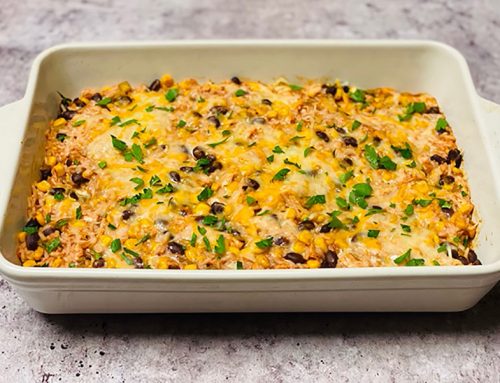
High Protein Chicken Enchilada Bake
3-Ingredient Shredded Salsa Chicken
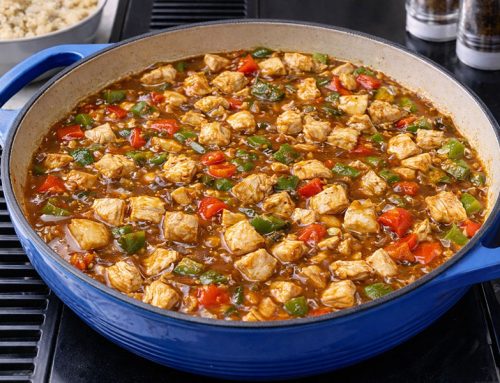
Cheesy Mexican Chicken And Rice Casserole (One Pot)
To browse hundreds of Burn the Fat recipes, CLICK HERE (members only)
Not a Burn The Fat Inner Circle member yet? To learn more and get access to hundreds of recipes and the Burn the Fat Meal Planner And Recipe Creation Software, CLICK HERE
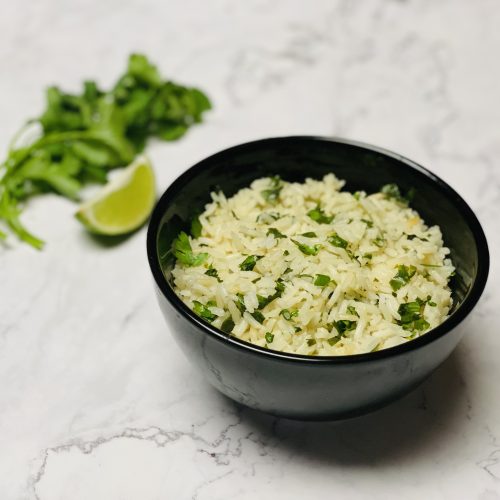
Stovetop Cilantro Lime Rice
Equipment
- Lemon zester
- Cast iron rice cooking pot
Ingredients
- 1 Tbsp extra virgin olive oil
- 1 cup basmati white long-grain rice, dry (uncooked) (180g, approx 3 cups cooked)
- 2 tsp fresh garlic finely minced
- 2 cups chicken broth
- 3 Tbsp lime zest (zest of one large lime or two small ones)
- 1/2 cup fresh cilantro, finely chopped
- 3 Tbsp lime juice (juice of one large fresh lime or two small ones)
- 1 pinch salt to taste
Instructions
- Zest one large (Persian) lime and finely mince the garlic.
- Heat 1 Tbsp olive oil in pot on medium high.
- Add rice. Toast the rice 2 minutes, stirring constantly.
- Add garlic, cook for 1 more minute, continuing to stir, before adding the broth.
- Add chicken broth and the lime zest. Reserve a little lime zest to add to the rice after cooking.
- Bring to a full boil. Cover with lid tightly, and turn down to low.
- While rice cooks, finely chop the cilantro and juice the limes.
- Simmer for about 17 to 18 minutes. If there is still liquid in the bottom of the pot, continue to simmer with lid on until all of the broth is absorbed and rice is cooked but still moist. (Cook time may be longer depending on your cookware and stove).
- When rice is done, take it off the burner and let it rest covered for 5 more minutes
- Transfer to large serving bowl. Add lime juice and cilantro and fluff/fold to combine.
- Optional: taste test your cooked rice. If it tastes a little flat, add a pinch of salt then retest.
Nutrition
 About Tom Venuto
Tom Venuto is a natural bodybuilding and fat loss expert. He is also a recipe creator specializing in fat-burning, muscle-building cooking. Tom is a former competitive bodybuilder and today works as a full-time fitness coach, writer, blogger, and author. In his spare time, he is an avid outdoor enthusiast, hiker and backpacker. His book, Burn The Fat, Feed The Muscle (BFFM) is an international bestseller, first as an ebook and now as a hardcover and audiobook. The Body Fat Solution, Tom’s book about emotional eating and long-term weight maintenance, was an Oprah Magazine and Men’s Fitness Magazine pick. Tom is also the founder of Burn The Fat Inner Circle – a fitness support community with over 56,000 members worldwide since 2006. Click here for membership details
Leave A Comment